
Email Marketing Strategy for Coaches: How to Build an Email-Based Business
The email marketing strategy I recommend for coaches, consultants and online business owners is to make email an integral part of how you run and grow your business. Your visibility, your list growth, your relationships and your sales all connect through your emails.
And this is exactly what I call building an email-based business.
For me, an email-based business is a business that heavily relies on email at the backend. You can still be visible everywhere else, and you can still sell through a call or a sales page. Email is what connects all of it.
You might be using Instagram, Pinterest, YouTube, blogging, podcasts or collaborations to get your business in front of more people. Wherever people discover you, you want to turn that visibility into email subscribers.
From there, you can build relationships, share your content, introduce your offers and create opportunities to sell. Some of this happens through the emails you write and send day to day. Some of it happens through automations you’ve set up in advance, and those keep working for you even when you can’t be on.
In this guide, I’ll walk you through how to build an email marketing strategy that brings together your visibility, list growth, email communication and sales, so you can build and grow an email-based business.
What Does an Email-Based Business Actually Look Like?
When I talk about building an email-based business, I don’t mean that you stop using social media, blogging, podcasts or other marketing channels. You can still use all of them. In fact, you need visibility to grow your business.
The difference is in how you use these platforms. You use them to bring people into your email ecosystem. Someone discovers you through an Instagram post, finds your blog through Google, listens to your podcast or comes across one of your collaborations. You give them a way to join your email list, and that’s where you start building a relationship with them.
Email is the backend that connects everything in your business.
Content brings people in. Lead magnets and other opt-ins help you grow your list. Emails help you stay connected, share resources, introduce your offers and create buying opportunities. And your automations keep all of this running without you having to manage every single interaction yourself.
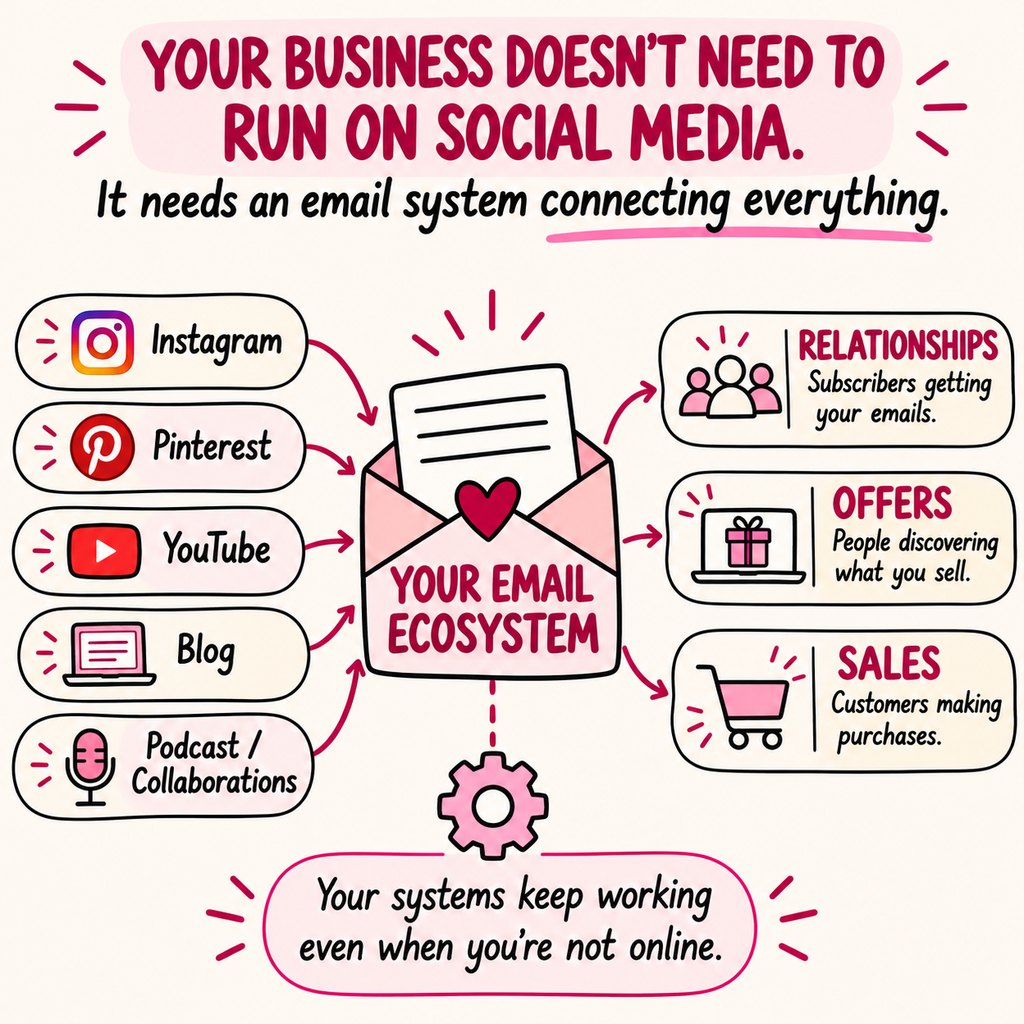
Once someone is on your list, it really becomes an ecosystem. People get introduced to different offers. They enter different funnels. Some of them end up buying, and others become aware of your offers, so they know where to come when they’re ready.
One of the biggest advantages of an email-based business is that you can have a great mix of active and passive selling. Active selling is when you’re sending emails day to day, like during a live launch, and selling your offers directly. Passive or automated selling is when you’ve set things up on automation and people are going through those funnels on their own. Both can happen at the same time.
This really helps when you cannot be on all the time. You need to take vacations. Or you might have an unpredictable lifestyle, like mine. With two kids, my days can get chaotic, and I have no idea what’s going to happen the next day. That’s when you really rely on systems, and most of my systems are email-based systems.
It’s also cost-effective. Most online business owners already have an email marketing tool, so you’re building on something you already have.
You can still use social media for visibility. You can still create content, collaborate with others and try different marketing channels. Email becomes the place where all these efforts come together and support your business growth.
Before You Build an Email Marketing Strategy, Get Clear on What You’re Selling
Before you start working on your email marketing strategy, there’s one thing I want you to get clear on. What are you actually selling?
You don’t need a perfect offer or a complete product suite. Your offer can evolve as your business grows. You can refine it, reposition it or launch new offers along the way, and that’s totally okay. But you should have an offer, ideally one you’ve already sold to at least a handful of people. You should know the transformation you’re offering and what your people actually want.
Why is this so important? Because your email marketing needs a direction. You need to know who you want to attract, what you want to help them with, and what you’d eventually like them to buy. Unless and until you know what you want to sell, I don’t think working on emails is going to help you much.
I learned this from my own experience.
When I started, I really wanted to grow my business the email way. So I started creating lead magnets based on what I felt people were downloading. But I didn’t have a core sellable offer yet. My offers were still evolving, and I kept adding subscriber after subscriber.
My list grew to around 10,000 subscribers before I had an established offer or a clear idea of what I wanted to sell. When I finally got clear on the core transformation I wanted to be known for, I realized my lead magnets were all from different areas. Most of the people on my list were not the people I wanted to serve anymore. My emails would just feel like they weren’t meant for them, so either they unsubscribed or I had to remove them.
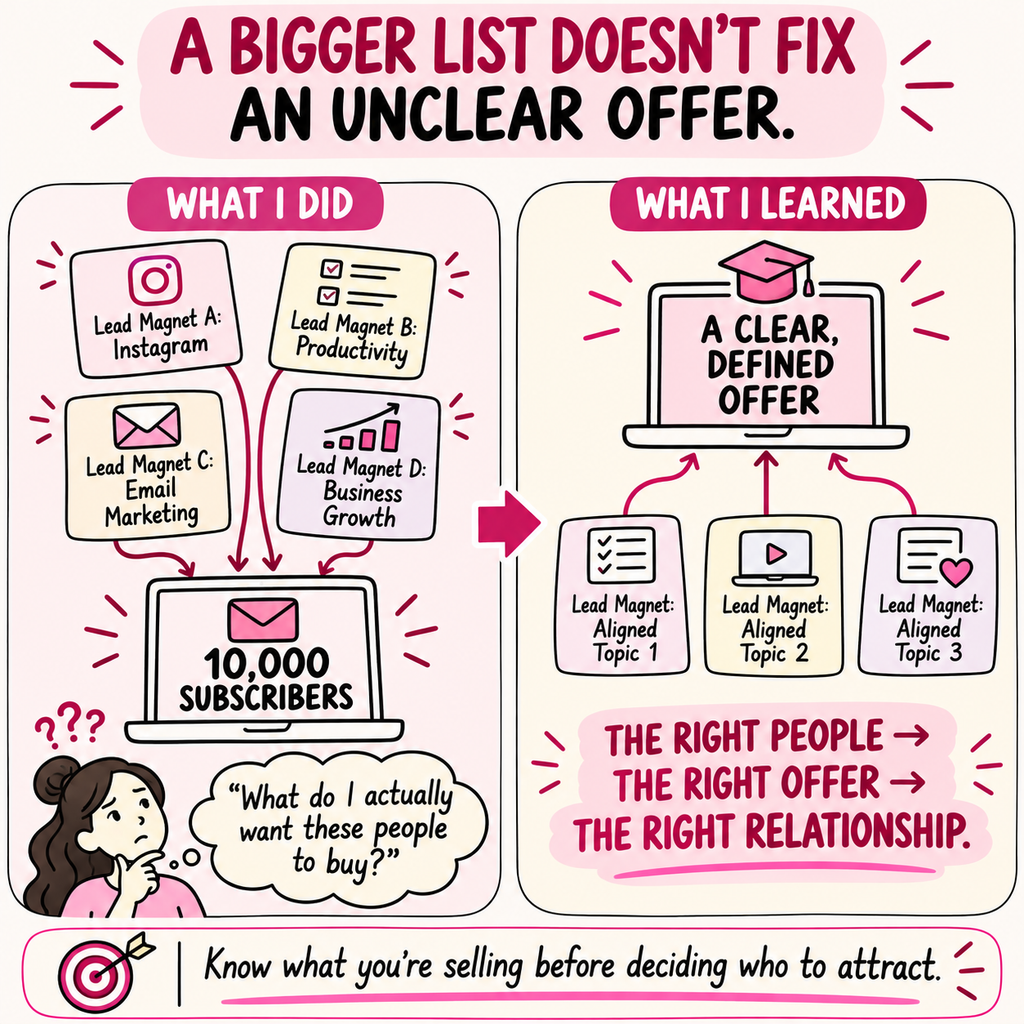
And that’s what I learned the hard way. Getting subscribers is super easy. Building relationships and training them to buy is the tough job.
So it really starts with you knowing why you’re bringing people onto your list. What do you want to help them with? What transformation are you offering? And what would you like them to buy next?
It could be as simple as, “This is the one-to-one coaching I’m selling, and these are the people I want to work with.” You don’t need multiple offers or a complicated product suite. You just need that clarity.
There is no need to have your funnels and automations ready. Your emails can be your funnel. To start, you need four things:
- An offer you’re talking about and selling
- A simple landing page where people can learn more about it
- A lead magnet or newsletter opt-in connected to that offer
- An email marketing tool where your subscribers can receive your day-to-day emails
That’s where you get to work. You can build the rest of your email systems as you go, as long as you know what you’re building towards.
Build Visibility and Create Opportunities to Grow Your Email List
Now that you know what you’re selling and who you want to serve, it’s time to get your business in front of the right people.
An email-based business still needs visibility. Unless and until you’re visible somewhere, you really cannot start building an audience. You might have the best lead magnets, amazing email sequences and multiple automations running in the background, but if people aren’t finding you, those systems won’t have much to work with.
And with an email-based business, your visibility has to turn into subscribers. I like to think of it this way. If 100 people are seeing you on any content platform, at least 20 of them should come onto your email list.
The first thing you need to decide is where you want to be visible. You don’t have to be on every single platform. Choose the ones that fit your business, your strengths and your schedule.
I usually look at visibility platforms in two groups: social media and off-social media.
Social media platforms
Social media platforms like Instagram, Facebook and LinkedIn are great if you enjoy creating day-to-day content. This content is short-lived, but it has lots of benefits for relationships. People can see you, people can feel you, and they get to know you through your conversations. It’s a great visibility platform for someone who likes to be there.
Off-social media platforms
Off-social media platforms like blogging, Pinterest, podcasts and YouTube are great if you like to work at your own pace with a lighter rhythm of content. Blogging and Pinterest work well if you like writing. Podcasts and YouTube are great if you like to speak. This content can also keep bringing people to you over time.
You can combine both too. Maybe you enjoy showing up on Instagram and publishing a blog every week. Maybe you prefer Pinterest and YouTube with occasional social media posts. There’s no single combination that works for everyone. Some people are moving more towards off-social media strategies, and that doesn’t mean they hate social media. They’re choosing what fits their schedule, so they aren’t dependent on one platform.
Choose visibility channels you can keep up with, and build a rhythm around them. You can always repurpose your content from everywhere to everywhere when you have the capacity, and that works really well with an email-based business too.
Most important of all, wherever you’re visible, create a way for people to join your email list.
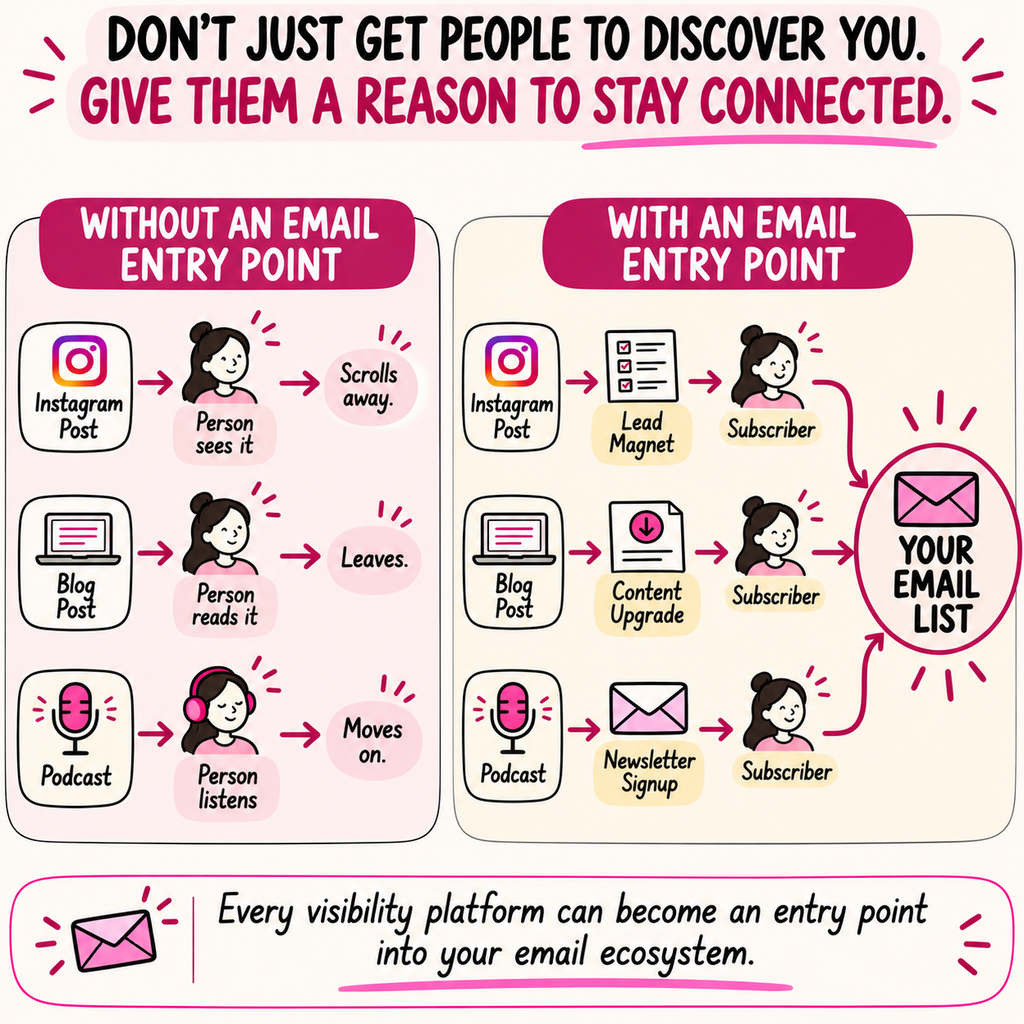
Your Instagram content can lead people to a relevant free resource. A blog can have opt-in forms and content upgrades. Your podcast can invite listeners to subscribe to your emails. Pinterest pins can send people to blog posts or landing pages where they can join your list.
Every visibility platform can become an entry point into your email ecosystem. You don’t want people to simply consume your content and move on. You want to give the people who are interested a way to stay connected with you, and that’s through your emails.
Create Different Entry Points to Grow Your Email List
Once you’ve decided where you’re going to be visible, the next step is to create ways for people to join your email list. This is where lead magnets become an integral part of your email marketing strategy.
When I say lead magnets, I don’t just mean PDFs. A lead magnet can be anything valuable you give for free in exchange for someone’s email address. It could be a template, a checklist, a mini-course, a workshop, a challenge, a resource library or a collection of tools that helps your audience with something specific.
The idea is to give people a reason to join your list. It should be relevant to what they need, and more importantly, connected to the offers you want to sell.
I also recommend having lead magnets for different stages of your audience’s journey. Some people are just getting started and need beginner-friendly resources to take their first steps. Others already know what they want and are looking for more advanced help, so they’re closer to the bottom of the funnel. You can create resources for both.
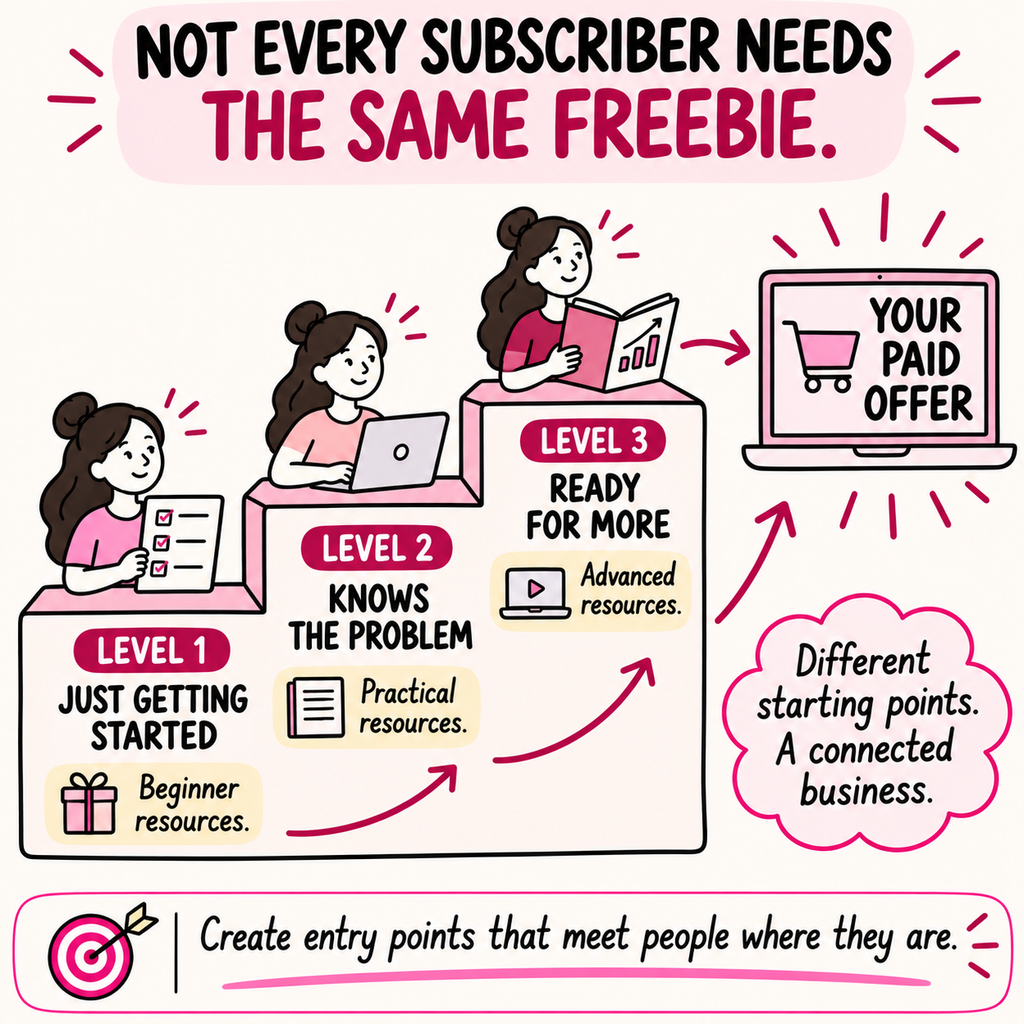
For example, if you’re a business coach, you might have a beginner resource that helps someone land their first few clients, and a more advanced resource that helps them build a client attraction system. Both attract people who might want your coaching one day, and they meet them at different stages.
Lead magnets aren’t the only way to grow your email list, though. You can also have opt-ins without a lead magnet, where people sign up because they want to receive your emails. Maybe you have a weekly newsletter or an evergreen email series. You’re still giving people a reason to sign up, even when there’s no freebie to download.
In my experience, the people who sign up without getting anything in return, just because they want to read your emails, are the best bunch of people you could ever have on your list. They want to hear your thoughts, learn from your experience and stay connected with you.
What’s recommended for email-based business
For a healthy email-based business, I always recommend a combination of everything. Have a few lead magnets for beginners, a few for your more advanced audience, and some opt-ins that invite people to receive your regular emails.
Make sure these entry points attract people who are relevant to your business. You don’t need dozens of lead magnets or a new freebie every week. Start with a few well-thought-out resources that connect to the transformation you offer.
Remember, you’re not growing your email list just to increase your subscriber count. You’re bringing the right people into your business and giving them a reason to stay connected with you.
If you’re still figuring out what kind of lead magnet to create, you can read my guide on how to create a lead magnet, and once you have one, my post on lead magnet funnels shows you how to connect it to a paid offer.
Build Relationships With Your Subscribers Through Consistent Emails
Getting someone onto your email list is only the beginning. What happens after they join is what really matters.
You don’t want someone to download your free resource, get a welcome email, and then hear from you only when you’re launching something. You want to build a relationship with them, and that happens through consistent communication.
It starts with your welcome sequence, which is how you welcome people into your world. A welcome sequence is important, but it’s only one part of the process. Your subscribers need to keep hearing from you after those first few emails.
This is where evergreen email series come in. You can have a rhythm or a theme for your weekly emails, so people know what to expect and get the content they want. They’re getting nurtured, and it’s not only pitching.
Think about what you can bring to your people. Maybe you release a new podcast episode, video or blog post and share it with them. You maybe giving them big discounts or deals. Maybe you do lots of collaborations and bring them fresh things from out there. You can share stories from your business, lessons you’ve learned and what’s happening behind the scenes. It has to be something exciting for your people, and also exciting for you.
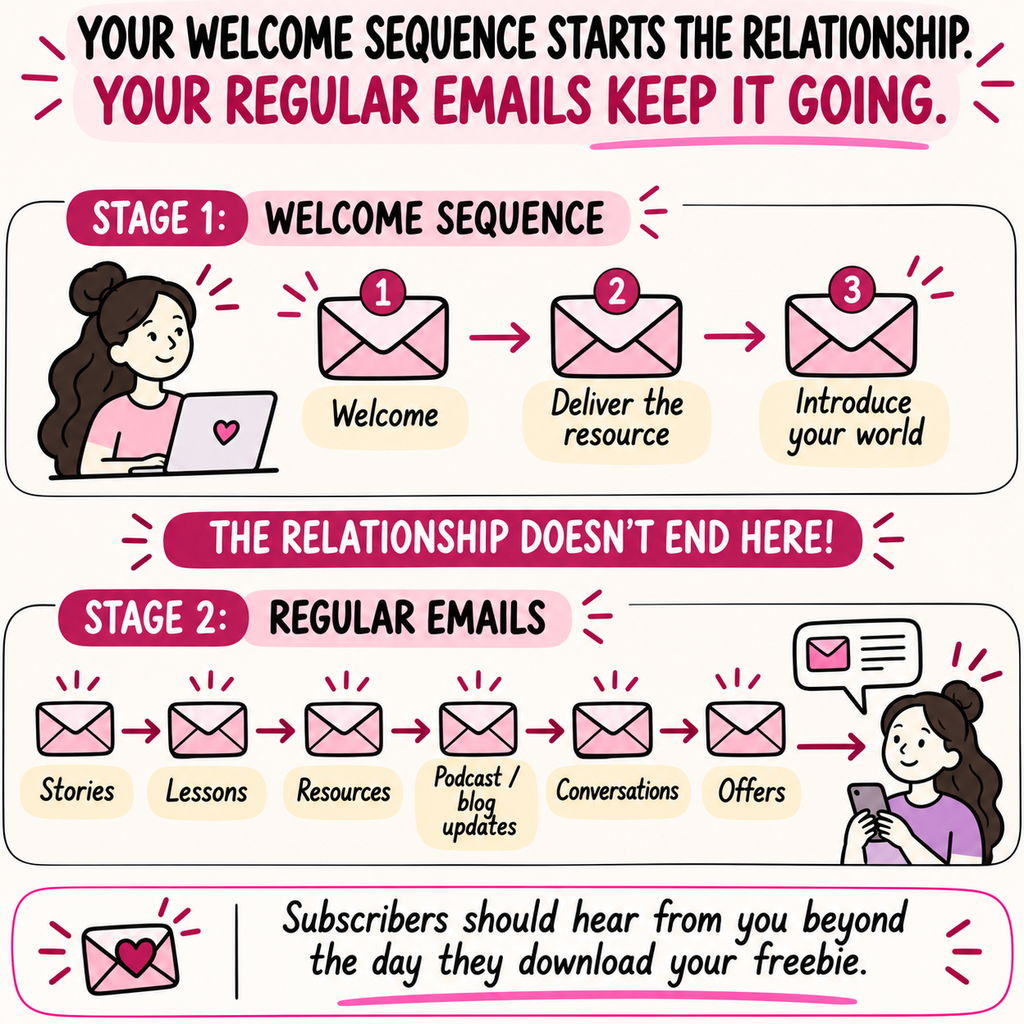
There isn’t one perfect email frequency that works for every business. Maybe you send one email a week, or maybe you prefer two or three. What matters is finding a rhythm you can keep up with, so your subscribers know they’ll hear from you regularly.
And don’t make every email a lesson or a sales pitch. Your emails can be educational, personal, conversational, promotional, or simply something interesting you want to share. You can talk about your experiences, share your opinions, recommend resources, invite people to an event or tell them about an offer that might help them.
Relationship Building Via emails
I wouldn’t say relationship building is just about scheduling some emails in advance. It’s about the day-to-day communication you have with your people. You get to know each other. They reply to you. So invite people to reply, ask them questions, and find out what they’re working on and what they’d love help with. When they respond, take the time to understand what they’re telling you.
Over time, your subscribers start to recognize your voice. They get to know how you think, what you believe in and how you help people like them. They know you because of the emails you send, and that goes far beyond having downloaded a freebie once.
Your welcome sequence starts the relationship. Your regular emails keep it going. And the more consistently you show up in their inbox, the more chances you have to build trust, understand your people and introduce your offers when they’re relevant.
Combine Active Selling With Automated Selling
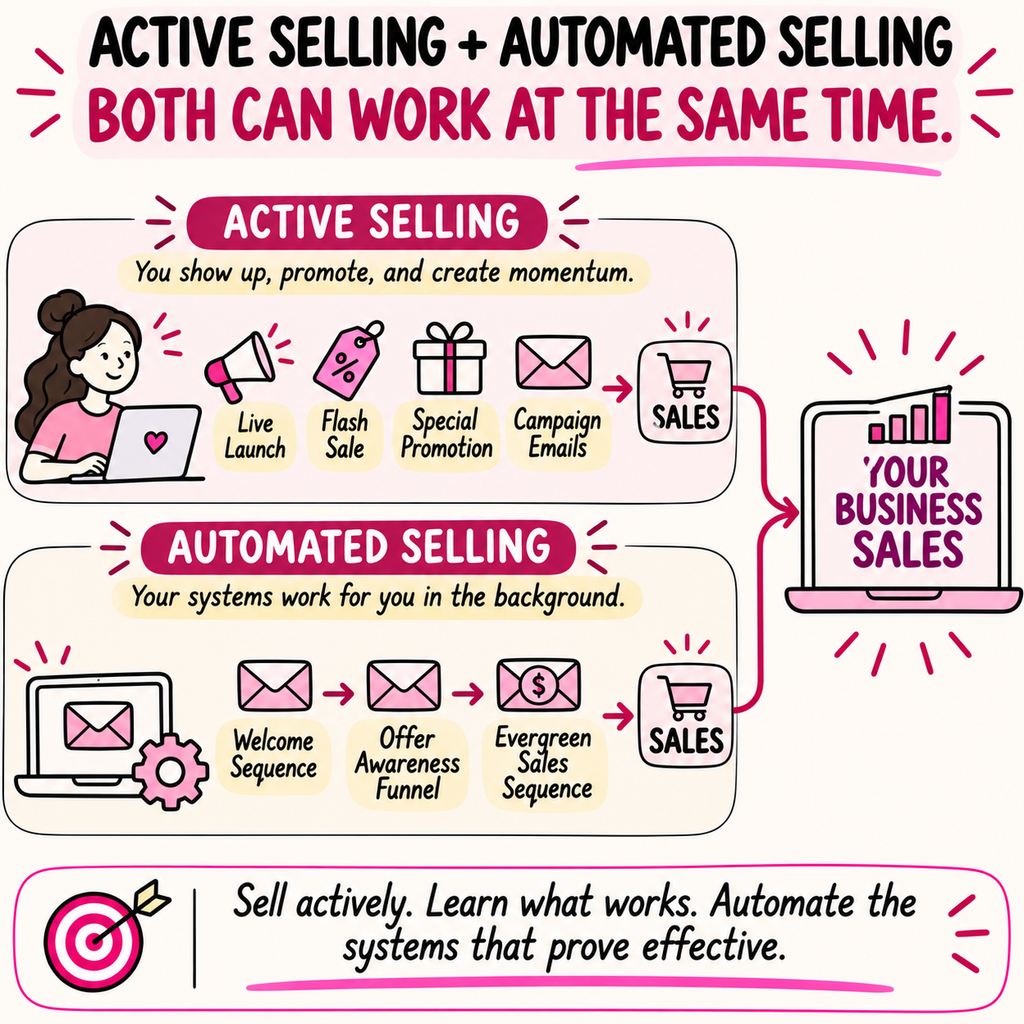
With an email-based business, you can sell through email in two ways: actively and on automation. I don’t think you should rely on just one of them, because both play an important role in your business.
Active Selling
Active selling is when you’re directly promoting your offers through email, with you being there and writing the emails. Think about a live launch, a flash sale, a special promotion or an email-based launch where you send emails to your list every day.
During these campaigns, you’re right there in the selling process. You’re checking whether people are opening your emails and what the click rates look like. You’re trying to understand what sort of messaging interests your people. Then you go, refine it and send again.
Every campaign teaches you something. You learn which angles your people relate to, what questions they have, and what might need to change in your messaging or your offer.
Automated Selling
Once something has worked, you go a step further and start building automations. These are the email sequences and funnels that keep talking to your subscribers based on how they joined your list, what they’re interested in and where they are in their journey with you.
For example, in my business, anyone who comes in goes into a welcome loop. For 30 days, they receive the sequence of emails I’ve decided on. You could also have an offer awareness funnel. Let’s say people came in through lead magnet A. They go through your offer awareness funnel until they join that offer, apply for it, or become really familiar with it. You can read more about how I set these up in my post on the evergreen sales email funnel
You could also have evergreen sales sequences or flash sale automations running in between. Even though it’s on automation, you want it to feel like you’re sitting there day in and day out writing to them. It’s just been put on automation.
Doing Both at the Same Time
Automated selling doesn’t mean you stop actively selling. You can run a live launch to your existing list while your welcome sequences and evergreen funnels keep working for new subscribers. Both can happen together.
I always recommend starting with active selling. Understand how your people respond, and then look at which parts of the process you can automate.
You don’t need to automate every campaign. Some promotions are time-sensitive, some offers are better launched live, and some conversations are better handled personally. But when you find a message or a customer journey that works well, you can turn it into an automated system.
That way, you’re not starting from scratch every time you want to sell something. You have campaigns you can run when you need to, and systems that keep creating buying opportunities in the background.
Choose the Right Email Marketing Platform and Build Your Systems
To run an email-based business, you need an email marketing platform that supports your list growth, your communication, your automations and your sales.
There are lots of email platforms out there, and each one has its own capabilities and its own way of doing automation. Some are great for beautifully designed newsletters. Others are stronger on automation, segmentation, reporting and integrations. So you need to see what each tool can do, and know what you’d like to stick to.
When choosing your platform, look beyond whether it can send a newsletter. You want a platform that lets you:
- Create opt-in forms and landing pages
- Organize subscribers with tags, segments and other subscriber information
- Send regular newsletters and promotional campaigns
- Build automated email sequences and customer journeys
- Track performance through opens, clicks and other reports
- Connect with the other tools you use in your business
Automation is especially important for an email-based business. You want to create different journeys for subscribers based on how they join your list, what they’re interested in and what actions they take.
For example, someone who downloads a beginner lead magnet might go into a different sequence than someone who signs up for an advanced resource. And someone who buys an offer should move into the right customer journey, so they don’t keep getting emails selling them something they already own.
Personally, I use Kit (formerly ConvertKit).
I love it because of its automation and simplicity. My core is lots of email-based automations and evergreen series, and Kit works for me with the stats and everything. I also know there are other tools that are worth testing. If design and the look and feel of your emails matter most to you, you might choose a different platform. Whatever you choose, make sure it can handle automation and give you the analytics and stats you need, because that’s the most important thing.
Think about your current needs, the size of your list, the automations you want to build, your budget and the tools you need to connect with.
And remember, you don’t have to build everything at once. Start with the basics. Set up your email platform, create your first opt-in, write a welcome sequence and set up a regular email rhythm. As your business grows, you can add more advanced automations, segments and funnels.
Your email platform is one part of the setup. The real value comes from how you use it to connect your visibility, your subscribers, your content and your offers.
Track Your Email Marketing Performance and Keep Improving
You can have a growing email list, regular emails going out and multiple automations running in the background. But how do you know whether your email marketing strategy is working?
This is where tracking comes in. For an email-based business, one of the most important things is to stay on top of your stats.
I don’t want you to send emails every week just because it’s on your content calendar. I want you to understand how your subscribers are responding, what they’re engaging with, and whether your emails are helping your business grow.
There are three areas I recommend paying attention to.
1. Keep Your Email List Healthy
Over time, you’re going to have people who never open your emails. Some may no longer be interested in your content. Others might have signed up for one resource and never really connected with your business.
You don’t need to keep every inactive subscriber on your list forever. Make sure you’re cleaning out cold subscribers regularly. You can send a re-engagement campaign first, and then decide whether to remove them. You can also put an automation in place that does this for you. Kit, for example, identifies your cold subscribers and lets you automate the cleanup.
Keeping your list healthy helps you focus on the people who want to hear from you, instead of chasing a bigger subscriber count.
2. Understand How People Respond to Your Emails
Next, look at your email performance. How many people are opening your emails? Is it moving in the direction you want? What sort of subject lines do your people love? This really gives you a pattern.
Whenever you’re actively selling, the main thing is to understand what your people love. What length of email do they like? Which links are they clicking more? Do they prefer a button or a text link? Do they respond better to short emails or longer, story-based ones? Which topics get more replies?
Test different patterns. See whether all your emails get similar click rates, or whether some get higher clicks and some get lower.
What I observed for emails
In my own observation, emails about free things usually get higher open rates and higher click rates. But even when it’s something free, if the subject line is different, the open rate can go down, and so can the click rate. So it really shows you what sort of messaging your people relate to, what links they like to click and what they like to see.
Also look for a weekly pattern. Which days are your open rates higher, and which days are they lower? These changes are usually small, but even small changes can make a big difference.
With my list, I’ve seen that weekend open rates are slightly lower. Click rates can be almost the same, but sales are slightly lower on weekends. My guess is that people open their emails but don’t have time to buy. Monday to Friday, during office hours and when the kids are out, is when I see a lot of people buying. That’s when they have their card handy.
This is just what I’ve seen on my list. Your people might behave very differently, so understand them and use that understanding when you set up your automations. Once you find a rhythm that works, it’s good to stick to it.
Also remember that open rates aren’t a perfect measure. Email privacy features can affect how opens are recorded, so don’t rely on open rates alone. Look at clicks, replies and actual sales too.
3. Connect Your Email Stats to Your Business Results
This is probably the most important part. Your goal is for your email marketing to grow your business, and more opens and clicks are only part of that.
Look at how many people buy after your promotional emails. Which campaigns bring in sales? Which automated sequences introduce subscribers to your offers? Are people joining your programs after coming through a particular lead magnet or email funnel?
You might find that one lead magnet brings in more subscribers, while another brings in people who are more likely to buy. You might also find that one email or campaign keeps creating interest in an offer.
These insights help you decide where to spend your time and what to improve.
And you don’t need to change everything every time an email doesn’t do well. Start by looking for patterns. Test one or two things, see what happens and keep refining.
Your email marketing strategy keeps evolving as your list grows, your audience changes and your business grows. Small improvements, made consistently, can make a big difference over time.
How to Start Building Your Email-Based Business
By now, you might be thinking about everything you need to put in place: lead magnets, email sequences, newsletters, automations, funnels, tracking and so much more.
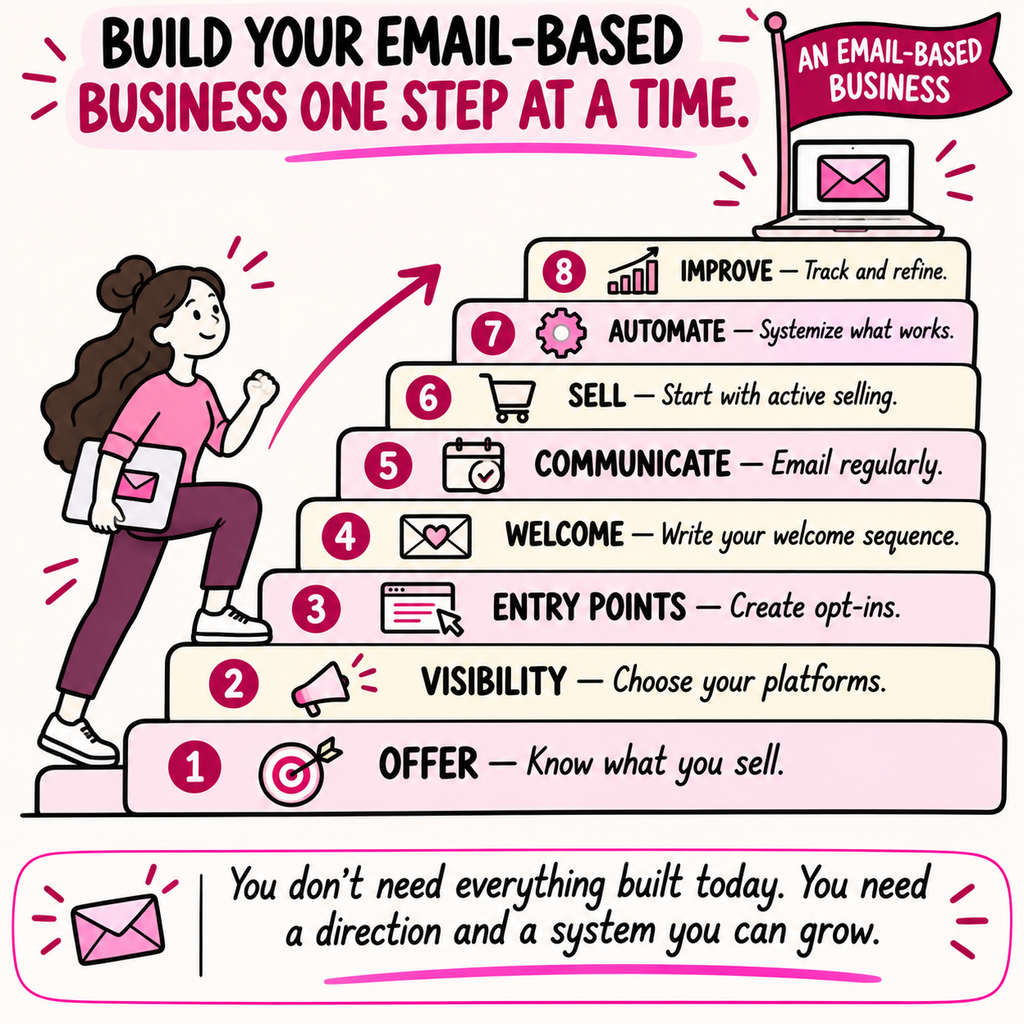
I don’t want you to feel that you need to build all of this before you can start using email strategically. You can build your email-based business one step at a time.
- Get clear on your offer. Know what you’re selling and who you want to attract. One clear offer and an understanding of the transformation you provide is enough to give your email marketing direction.
- Choose your visibility platforms. Pick one or two channels where you can consistently get in front of the right people.
- Create your entry points. Set up a relevant lead magnet or an opt-in for your regular emails, with a simple opt-in page.
- Write your welcome sequence. Introduce your business, share something useful and help subscribers see how you can support them.
- Email your list regularly. Even one email a week is a great start.
- Sell actively first. Introduce your offers through live email campaigns, and pay attention to how people respond, what they ask and which messages lead to sales.
- Automate what works. Start with an offer awareness funnel for one of your lead magnets, or an evergreen sequence that introduces your signature offer to new subscribers.
- Track and refine. Keep an eye on your stats, clean your list and keep improving as you learn more about your people.
There is no need to complicate email marketing strategy
You don’t need ten lead magnets, five funnels and a dozen automations to start. You need a clear direction and a system that connects the different parts of your business.
Growing your list is only one part of the process. What matters is what happens after someone subscribes: how you talk to them, how you build trust, how you introduce your offers and how you create chances for them to buy.
Your email list is an asset, and your email marketing system is what makes that asset valuable. Start building that system today, keep improving it as you learn more about your people, and let email become an integral part of how you attract, connect with and sell to your customers.
Ready to Grow and Nurture Your Email List?
Everything in an email-based business starts with having the right people on your list and keeping in touch with them.
Inside the Profitable List System, I help you grow your email list and nurture it, from your welcome sequence and welcome loop to your weekly email rhythm and newsletter. You’ll get a one-to-one call with me when you join, plus weekly calls to help you put it all into practice.
If you’re ready to build an email list that supports your sales, take a look at the Profitable List System.