
Lead Magnet Funnel: How to Turn Freebie Downloads Into Buyers
A lead magnet funnel connects your free lead magnet, your email sequence and your paid offer, so that someone who downloads your freebie has a clear path to becoming a buyer. Without it, you can have people joining your email list every single day and still not make many sales from it.
I know this because that’s exactly what was happening in my business.
My Attempts at Building this funnel:
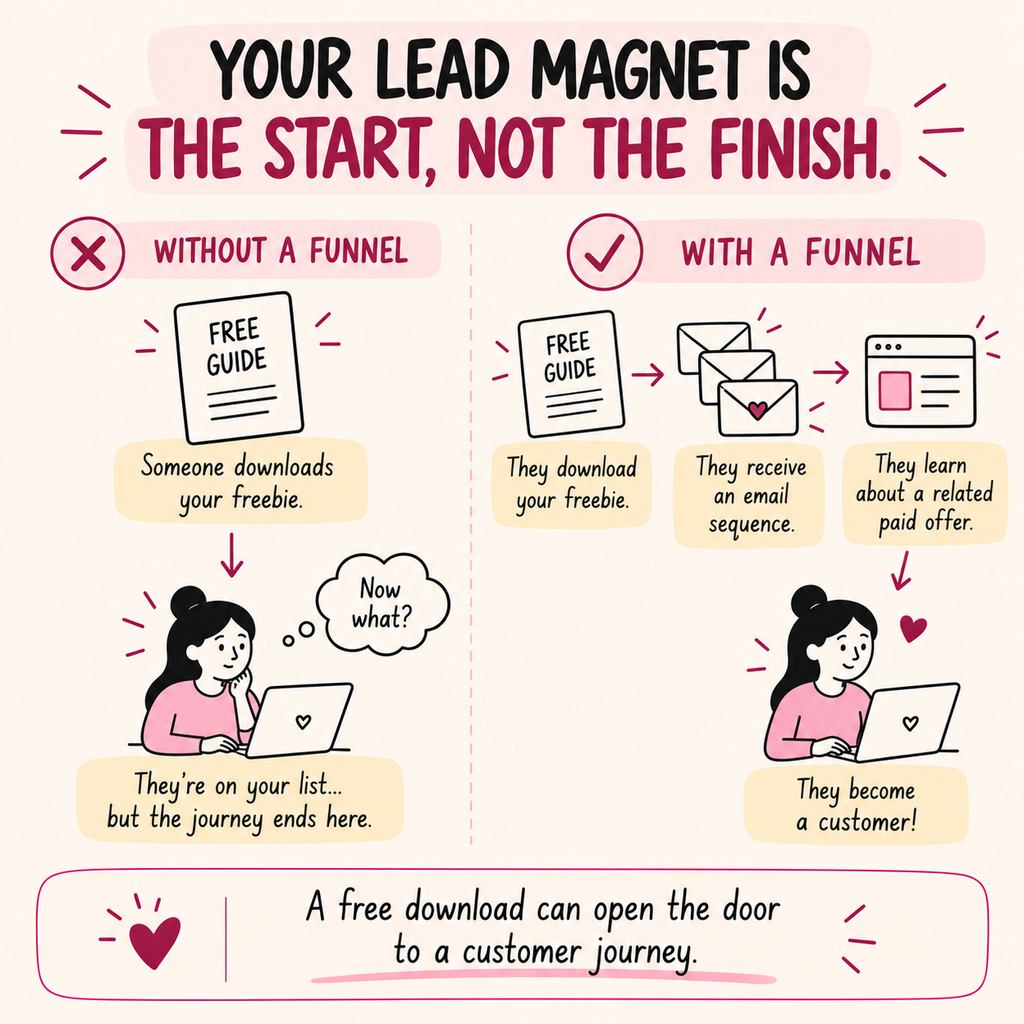
I had multiple lead magnets, and people were signing up for them all the time. As a consumer, I was also signing up for other people’s freebies, and part of the reason was that I wanted to see what they would offer me on the thank-you page. It was a pleasure to see a paid offer when I downloaded something free, because I could take the next step straight away without waiting for a launch or digging around their website to figure out what they sold.
And yet I wasn’t doing the same thing in my own business. People were joining my list, and I wasn’t showing them an offer at that point. I did have welcome sequences that introduced my offers, but I was missing the chance to turn a new subscriber into a buyer right from the start.
When I started building funnels with tripwires, I got it wrong at first. I thought a discount and a timer would be enough to make people buy. It took a lot of testing with buyer psychology, where I placed the offer, how I priced it and how I presented it before I understood what made people buy. Eventually I had a run of 81 days in a row with at least one tripwire sale every single day.
Then I started playing with order bumps, which gave me a way to make more from each purchase without bringing in more people. Both of these changed the way I looked at the journey from a freebie download to a paid offer.
Your lead magnet doesn’t have to sit on its own as a free resource.
You can build a journey around it that introduces people to your business, builds the relationship through email, and gives them chances to buy your paid offers along the way.
In this post, I’ll walk you through how a lead magnet funnel works, the three things you need to build one, two optional extras that can help you make sales sooner, and the tools you can use to put it all together. I’ll also show you what this looks like in my own business, and share a client case study where one funnel made $1,007.18 in seven days.
How Does a Lead Magnet Funnel Work?
A lead magnet funnel starts when someone signs up for something free from you, like a guide, a checklist, a workbook or a training. Once they opt in, they get the resource and start getting emails from you, and those emails help them get to know you, learn from you and find out about the paid offers you have.
Depending on how you set it up, they might also see a low-cost offer on the thank-you page, or on a page you send them to right after they sign up. If they buy it, you can give them the option to add a related product at checkout, which is called an order bump.
The emails keep going after that first step. You can nurture people with helpful content, introduce one paid offer through a sales sequence, or use a mix of sequences to guide them to the offer that fits them best.
So every lead magnet funnel has three main parts:
- A lead magnet, which is the free resource that brings people onto your email list.
- An email sequence, which delivers the resource, builds the relationship and introduces your paid offers.
- A paid offer, which is the product, program or service you want your subscribers to buy.
There are also two optional extras you can add to start making money sooner:
- A tripwire, which is a low-cost offer you show people right after they opt in, usually on the thank-you page or a page they’re sent to after signing up.
- An order bump, which is a related offer on the checkout page that people can add to their purchase with one click.
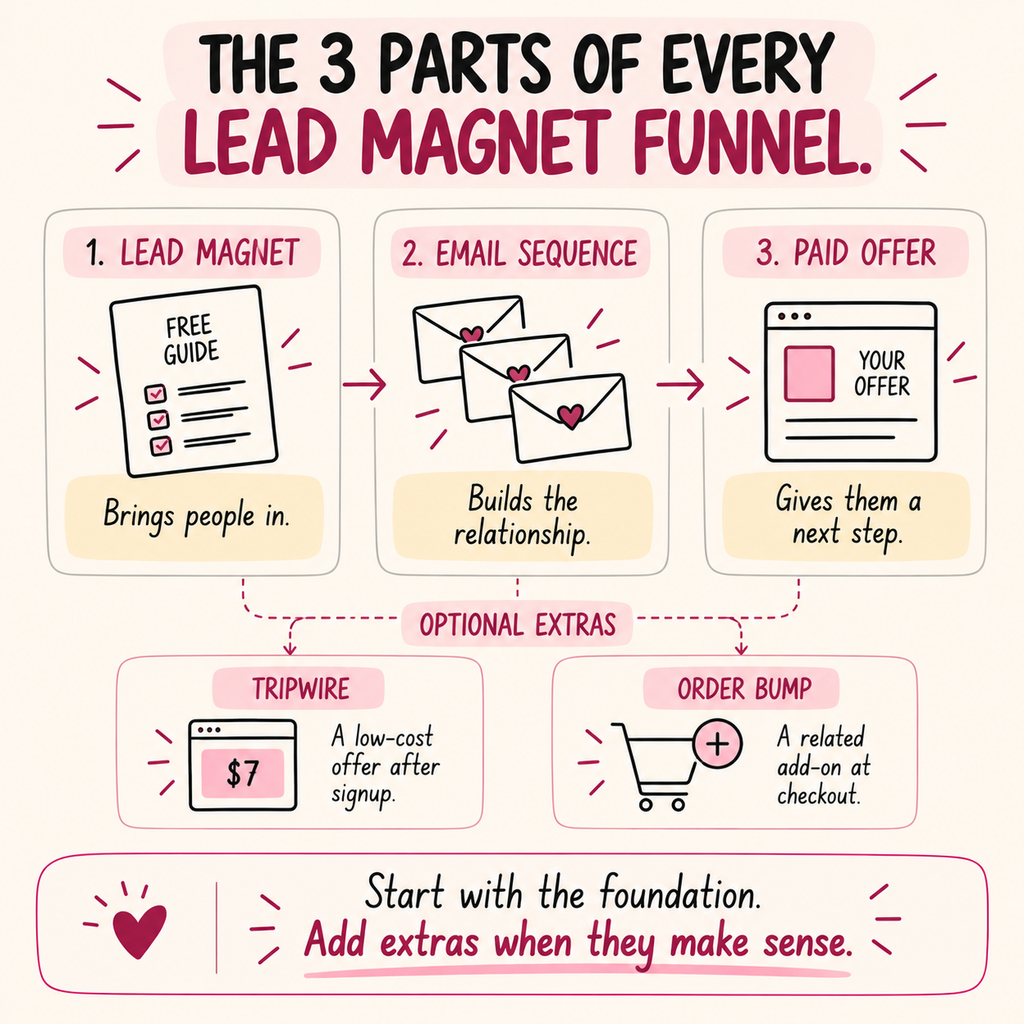
You don’t need lots of paid products or complicated automations to get started. The lead magnet, the emails and the paid offer are your foundation, and you can add tripwires and order bumps later, once you have offers that fit.
Let’s look at each one.
Element 1: Lead Magnets, the Entry Point to Your Funnel
A lead magnet is something free you give in exchange for someone’s email address. People sign up because they want help with a problem, want to learn something new, or want to get a task done faster.
It can be a guide, a checklist, a workbook, a template, a resource library or a free training. The format matters less than whether your audience really wants it and finds it useful.
Every time someone signs up for one of your lead magnets, they become a subscriber you can keep talking to through email. That’s why your lead magnet is so important in your funnel, because it’s how people enter your business, and it lets you keep the relationship going long after they’ve downloaded the freebie.
If you’re working on your own lead magnet, check this out- how to create a high-converting lead magnet that attracts buyers.
Element 2: The Email Sequence, Where You Nurture Subscribers and Introduce Your Offers
Once someone downloads your lead magnet, they’ve stepped into your world, and this is where your emails come in. You now have a way to stay in touch with them, share what you know, and help them find the paid offers in your business.
Your first email delivers the lead magnet they signed up for, but your emails don’t have to stop there. You can keep the relationship going with a sequence that helps subscribers get to know you, learn from you and see how you can help them.
There are different kinds of email sequences you can use, depending on what you want them to do.
A nurture sequence is all about giving value and building a relationship with your subscribers. You can share helpful tips, explain ideas related to your lead magnet, send people to your other content, and help them get more out of what they downloaded. A nurture sequence doesn’t have to sell anything.
A sales sequence is written to introduce and sell one particular paid offer. You can use it to explain what the offer is, who it’s for, how it helps, and why someone might want to invest in it. If someone buys the offer while they’re in the sequence, take them out of it, so they don’t keep getting emails selling them something they already own.
You can use a nurture sequence, a sales sequence, or both. What matters is that you decide what you want your emails to do, so new subscribers aren’t left to figure out on their own what to buy from you.
For example, you might deliver a free guide, follow up with emails that help subscribers put it into practice, and later introduce a paid program that fits. Or you might send new subscribers into a separate sales sequence for one specific offer.
You can also merge the two, so your nurture sequence flows straight into an offer awareness sequence. That way, subscribers keep getting value from you while they slowly get to know your offer. This is the reason I created my Offer Awareness Email Funnel, because I didn’t want to wait for subscribers to discover my signature offer by themselves, so I introduce it through email over time. You can read more about how this works in my post on the evergreen sales email funnel
Element 3: The Paid Offer, Where Subscribers Can Take the Next Step
Your lead magnet brings people onto your list, and your emails help them get to know you. Your paid offer is where they get to take the next step and work with you more closely.
This could be your signature program, a course, a group coaching offer, or any other product or service you want to sell. You don’t need to create a new offer for every lead magnet, because you can connect an offer you already have to your funnel and use your emails to introduce it to the people it can help.
Think about what kind of help someone might need after they’ve used your free resource. Your lead magnet might help them understand a problem, give them a place to start, or help them finish one part of a bigger process, and your paid offer is how they can go further.
For example, someone who downloads a guide on promoting their lead magnet might later want a program that helps them grow their email list in a more strategic way. The free guide gives them useful ideas, and the paid program helps them work towards the bigger goal.
Some ideas of what these emails can do:
You can introduce your paid offer in a nurture sequence, in a sales sequence, or through an evergreen email funnel built to make people aware of that offer. Which one you choose depends on your business, your offer and how you like to talk to your subscribers.
And remember, you don’t need every subscriber to buy straight away. You just want people to have chances to discover your paid offers when those offers are right for them. Some people will buy quickly, some will need more time, and some might end up wanting a different offer altogether.
What you’re building is a clear connection between the people joining your list, the emails they get and the paid offers you sell, and that’s what makes your lead magnet the start of a bigger customer journey.
Optional Element 1: Tripwires, an Opportunity to Make a Sale Right After Opt-In
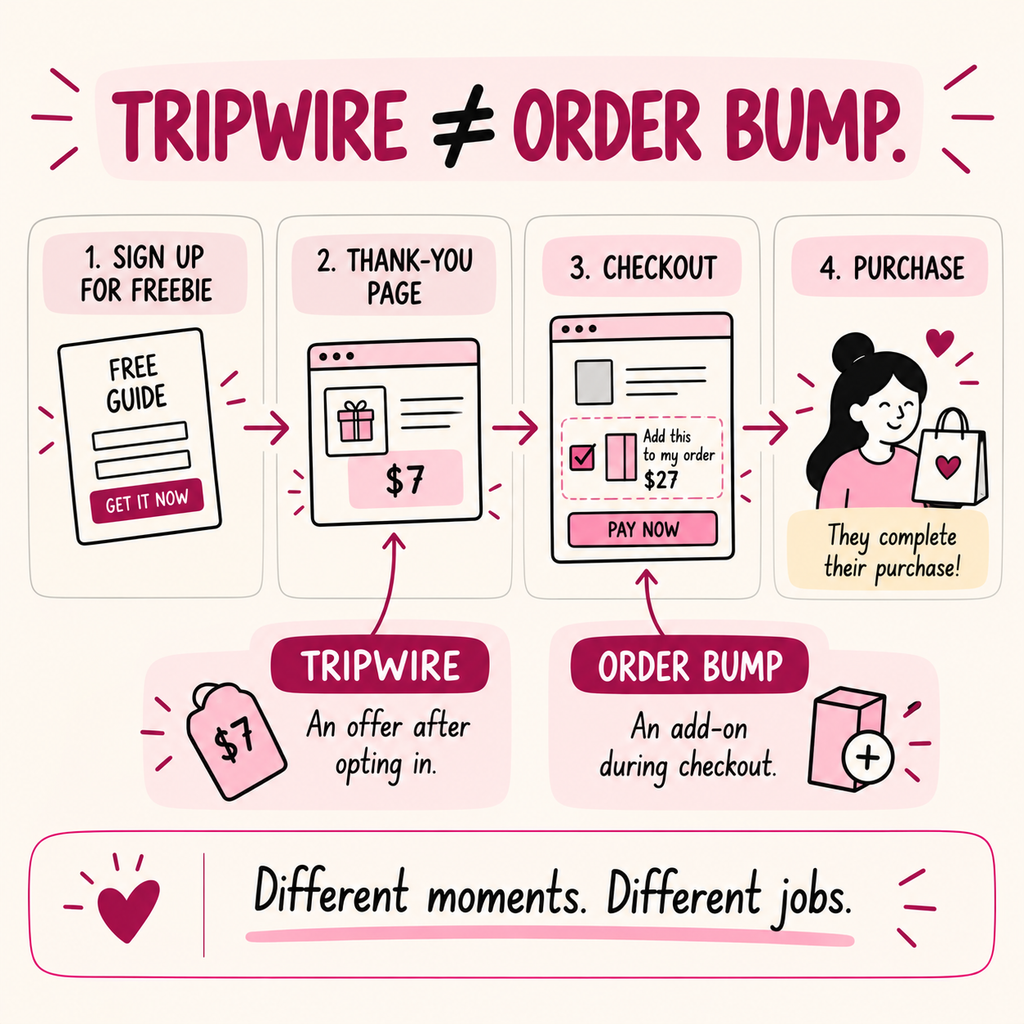
A tripwire is a low-cost offer you show someone right after they sign up for your lead magnet. It’s priced lower than your main offer, which makes it an easy way for a new subscriber to make their first purchase from you.
In my business, I usually put tripwires on the thank-you page, or on a page people are sent to straight after they opt in. So instead of just thanking someone for signing up and leaving it there, I use that page to show them a paid offer that fits what they just downloaded.
The most important thing is that the offer makes sense next to the freebie. If your freebie helps someone understand a problem or take the first step towards a result, your tripwire can help them go further. It shouldn’t be a random low-cost product you’ve stuck on the page just because you want a sale.
My Tripwire Journey:
I learned this through a lot of trial and error. When I first tried tripwires, I took one of my existing low-cost offers, put it on a thank-you page and expected it to work. It did bring in some sales, but nowhere near what I’d hoped for.
At the time, I thought tripwires were mostly about a big discount and a timer. But even when I gave discounts as high as 90%, some offers still didn’t sell the way I expected.
That pushed me to look much more closely at buyer psychology, why someone had opted in, how relevant the offer was, and where it showed up in the funnel. I started testing different placements, offers, prices and ways of creating urgency, instead of assuming the discount would do all the work.
Over time, I created tripwires for almost every lead magnet in my business, each one matched to the freebie people had signed up for. That’s when I had my run of 81 days in a row with at least one tripwire sale every day.
I also started testing tripwires without timers and without heavy discounts, which helped me think beyond the quick sale and see how tripwires could become a steady part of my business.
All of that testing is what I teach inside my tripwire training, Daily Sales with Tripwires, where I share the system I’ve built and refined over time.
You don’t need a tripwire for every lead magnet, and you don’t need one at all to build a lead magnet funnel. It’s an extra that makes sense when you have a low-cost offer that fits and you want to give new subscribers a chance to buy right away.
Optional Element 2: Order Bumps, a Way to Increase the Value of a Purchase
An order bump is an extra offer shown on the checkout page when someone is about to buy something. They can add it to their order, usually by ticking a box, without going through a separate checkout.
The difference between a tripwire and an order bump is when they show up. A tripwire is offered after someone signs up for something free, and an order bump is offered when someone is already checking out for something paid.
A good order bump goes with the original purchase. It might be a template pack that helps someone use what they’re learning, a resource that makes the process easier, or an extra training that supports the result they’re working towards. You want it to add value to what they’re already buying.
My Tests with Order Bumps:
I first tried order bumps after noticing how often other businesses offered something extra at checkout. I wanted to understand how they worked, but back then most of my products were priced between $100 and $200.
For my very first order bump, I added a one-to-one coaching call for $97 to a $200 offer. So instead of making $200 from that sale, I could make $297 whenever someone added the call. That’s a 48.5% increase in the order value, without having to find another customer through more marketing, and at that stage of my business, that extra money made a real difference.
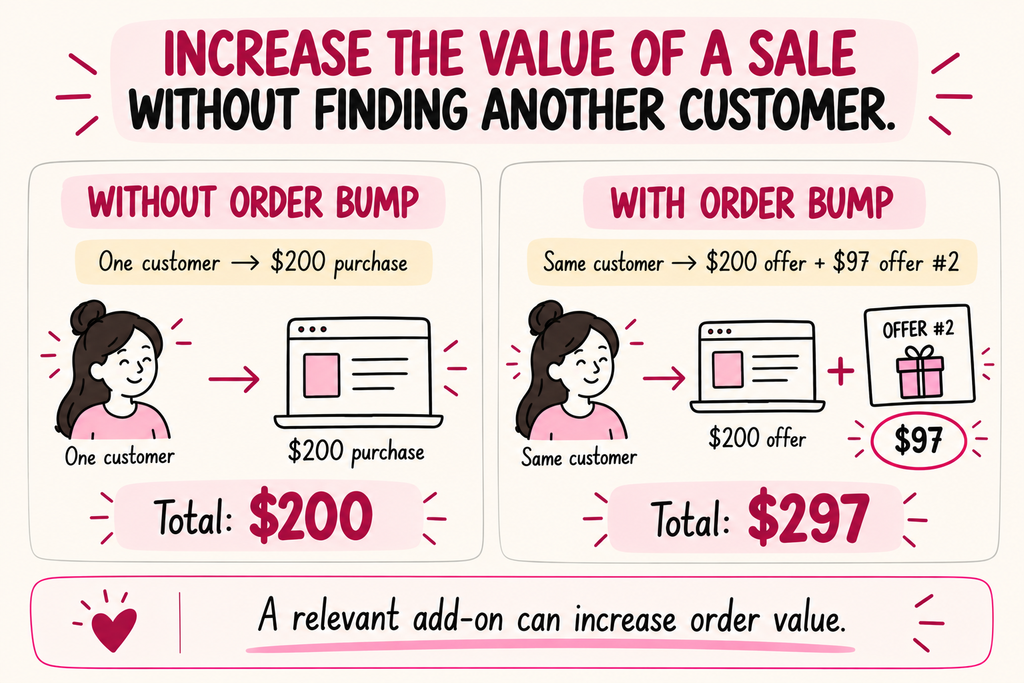
Later, I added an order bump to one of my digital courses priced under $97, and around 80% of the buyers took it. As I grew my business and tested order bumps across more offers, I found that on average about 10% of buyers added the order bump.
The results weren’t the same for every offer, but they showed me how much extra revenue a well-matched add-on can bring in without needing more customers.
I eventually put everything I learned into Profit Booster Order Bumps, which draws on my testing across all kinds of offers, from digital courses to higher-priced programs.
You don’t need an order bump on every checkout page either. Start by asking yourself whether you have something that naturally goes with what the person is buying. It should make their purchase more useful, and it shouldn’t distract them with something unrelated.
If people are already reaching your checkout page, an order bump gives you one more chance to increase the value of each sale. And when it fits naturally into your lead magnet funnel, it becomes another source of income without you needing more traffic.
What Does a Lead Magnet Funnel Look Like in My Business?
Right now I have more than 19 lead magnets in my business, and each one has its own funnel. The offers and email sequences change from one funnel to the next, depending on the lead magnet and the paid offers I want to introduce.
For example, when someone downloads my 47 Ways to Promote Your Lead Magnet guide, they see my Buyer Ready Lead Magnet Formula on the thank-you page as a low-cost offer, and that offer has its own order bump at checkout. After they opt in, they go into my email sequences, where I keep nurturing them and introduce other offers that fit.
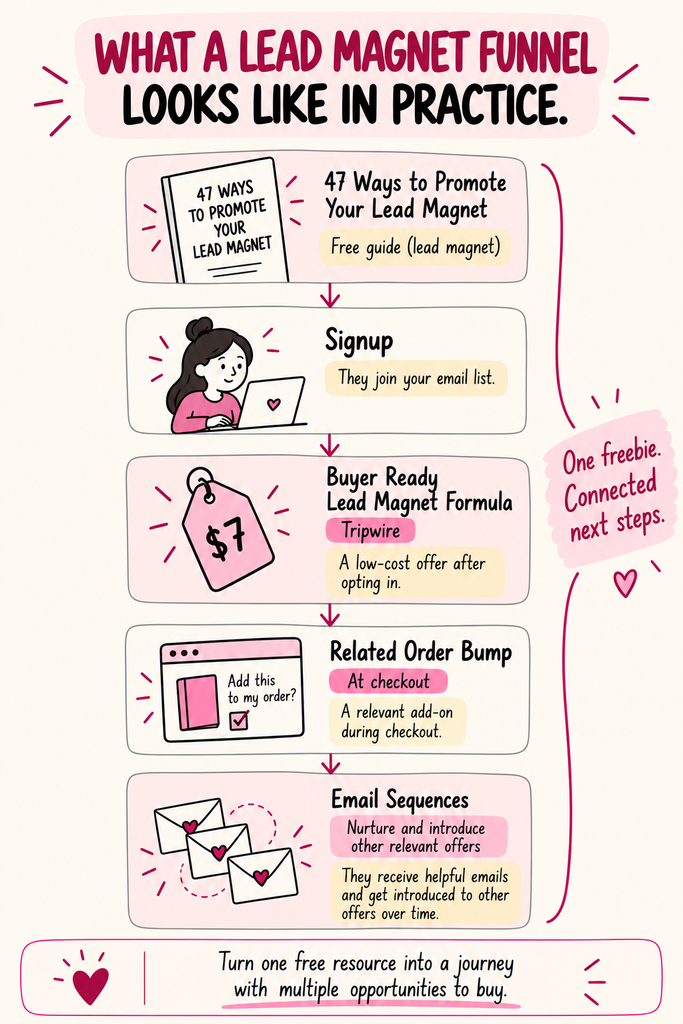
So in this one funnel, all the pieces work together. The free guide brings someone onto my list, the tripwire gives them a chance to buy straight away, the order bump lets them add something that goes with their purchase, and the emails keep the relationship going long after that first step.
You don’t have to copy my whole setup to get started. You can begin with one lead magnet, one email sequence and one paid offer, and as your business grows and you have more offers, you can add more ways to make money from your funnels.
What Tools Do You Need to Build a Lead Magnet Funnel?
You don’t need a complicated tech setup to build a lead magnet funnel. Start with the tools you already use to deliver your freebie, email your subscribers and sell your offers, and add more only when your funnel needs them.
Here’s what you’ll need.
1. An Email Marketing Tool
Your email marketing platform is where your subscribers live and where you talk to them after they opt in. You’ll use it to deliver your lead magnet, send your nurture emails, introduce your paid offers and manage all the different sequences in your business.
Pick a platform that lets you organise your subscribers and automate the emails you want them to get. If the tool you already have does this, you probably don’t need to switch just to build a funnel. You can also use an all-in-one platform that gives you email, landing pages, sales pages and payments in one place.
2. An Opt-In Page
Your opt-in page is where people sign up for your lead magnet. It should explain what they’re getting and give them an easy way to sign up.
You don’t need a separate website or a fancy page builder for this, because most email marketing platforms and all-in-one tools let you build opt-in pages right inside them.
3. A Thank-You Page or Redirect Page
After someone signs up, they need somewhere to go next. This could be a thank-you page that confirms their signup and tells them how to get the freebie, or a page you send them to right after they opt in.
If you’re using a tripwire, this is the page where you show your low-cost offer. If you’re not, the page can simply confirm the signup and tell them to check their inbox.
4. A Way to Accept Payments
If you want to sell a tripwire or any other paid offer right after someone opts in, you’ll need a checkout that can take payments and deliver the product.
If you’re adding an order bump, your checkout needs to support that too. Not every checkout tool handles order bumps the same way, so check what your current platform can do before you pay for another tool.
5. Optional Tools for Timers and Other Automations
At some point you might want extra tools for countdown timers, more advanced automations or other parts of your funnel. For my tripwire timers, I’ve used Deadline Funnel and Countdown Hero.
These are extras, though, and you don’t need them to build a lead magnet funnel. You can start without timers and add them later if they help your strategy.
What matters most is building a funnel that works with the tools you already have, so you’re not spending weeks setting up tech before you even start using it.
Case Study: How My Client Made $1,007.18 From One Funnel in Seven Days
One of my clients had an email list of about 750 subscribers, but she was struggling to make sales from it. She had tried promoting her $699 group program with discounts and selling low-cost courses, and neither one brought in the results she wanted.
So we tried something different and built a funnel that started with a free workbook and gave subscribers a few chances to take the next step.
The funnel had a free 19-page workbook, a $29 tripwire training that went with the workbook, a $77 order bump at checkout, and a free video training that introduced her $699 group program.
We tied all of these together with email sequences that delivered the resources, invited people to sign up for the video training, and then introduced the main offer with an 18% discount.
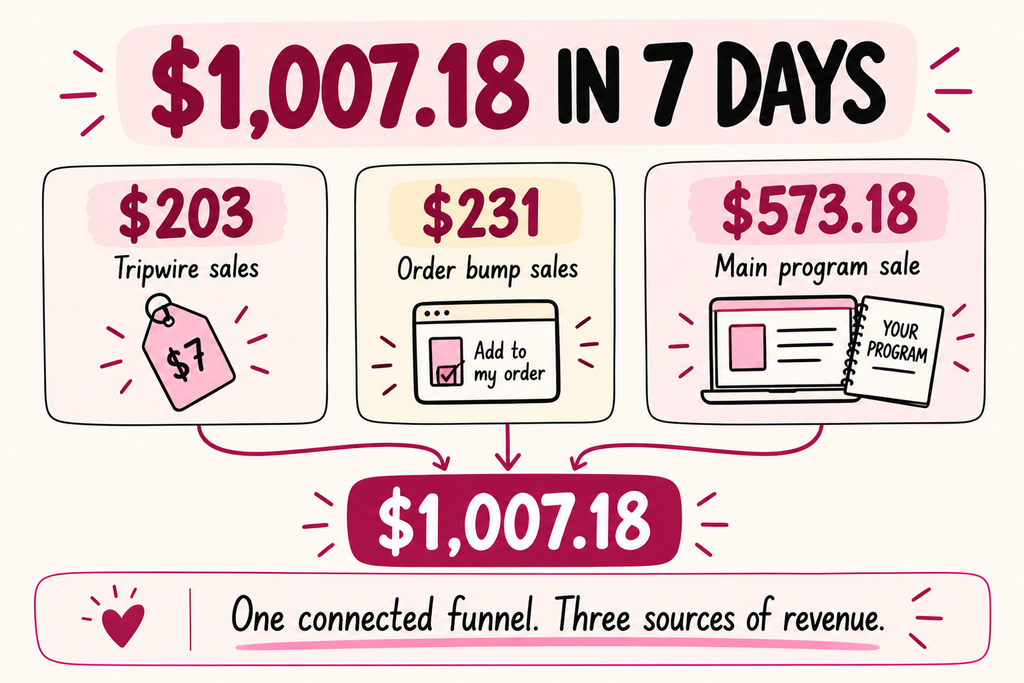
The funnel made $1,007.18 in seven days. Here’s how that broke down:
- $203 from seven tripwire sales
- $231 from three order bump sales
- $573.18 from one sale of the main program
The free workbook got more than 100 signups, and about 24 people registered for the video training.
What made this funnel work was the way we connected the free resource, the paid offers and the email sequences, so each piece had a job in moving subscribers to the next step.
If you’d like to see exactly how we built it, I’ve put together a detailed case study that walks through the funnel, the offers, the email sequences and the results. Download the full case study here.
Ready to Grow a List of Buyers?
A lead magnet funnel connects your free resources, your email sequences and your paid offers, so new subscribers get real chances to become customers. You can start with the basics and add tripwires and order bumps as your business and your offers grow.
There’s one more piece to this, though, and that’s getting the right people onto your list in the first place.
Inside the Profitable List System, I help you grow your list with that bigger picture in mind. Instead of relying on one freebie, you’ll build multiple lead magnets that attract different parts of your audience and bring potential buyers into your business, and you’ll get weekly calls with me to help you put it all into practice.
If you’re ready to grow your email list with more intention and build an audience that supports your sales, take a look at the Profitable List System here.
1 Comment