

How to Build an Email List From Scratch: A Beginner’s Guide to Your First 100 Subscribers
If you’re starting an email list from scratch, you don’t need a website, thousands of followers, or a complicated funnel. You need something useful that people would want to receive, an email marketing platform where they can sign up, a way to deliver what you promised, and a way to get people to your signup page.
That’s really all you need to get started.
Every big email list started with zero subscribers. So if you’re a beginner in the online business space and you’re looking at your empty list wondering where to begin, you are exactly where everyone else started.
And this is important because building an email list from scratch is different from starting a business from scratch.
If you are still figuring out your niche, what you want to sell, who you want to work with, and all of those basic business decisions, you have a different set of things to work through first.
But if you already have something you want to build, sell, teach, or share and you simply don’t have an email list yet, this is where you can start.
Whether you’re building an online coaching business, a consulting business, or another information-based business, the basic process of starting your list remains pretty much the same.
You need a reason for someone to give you their email address, somewhere for them to sign up, and a way to continue communicating with them after they do.
From there, your list can grow in many different ways. You can use social media, your blog, Facebook groups, collaborations, podcasts, YouTube, or other places where people can discover you.
But it always starts the same way.
You have zero subscribers.
And you get your first one.
You Don’t Need a Huge Audience to Start Building Your List
You don’t need a huge audience to start building an email list. You can start with whatever audience you have right now.
You could be active on social media and have just 10 followers. You could be writing a blog and getting 100 views a month. You could be using Facebook groups to get people to your lead magnet. You could also be getting people through collaborations, referrals, podcasts, YouTube, or any other way that people are discovering you.
The number of people you have access to right now does not need to be huge. What matters is that you have a way to get your lead magnet in front of people and that you are committed to promoting it consistently.
There is also something else that I noticed when I started building my email list that I don’t think people talk about enough.
The moment someone signs up for your email list to receive something from you, they are already seeing you as someone they want to learn from.
Even if you have just one person on your list, that one person has made a choice to give you their email address because they want something that you have created. That was a big shift for me.
Don’t be obsessed with numbers like me.
When I started my online business, I was doing what most people do. I was creating content on social media and trying to show up consistently. Instagram was where I started, and I was showing up every day. But I found myself getting exhausted because it felt like I always had to be there for people to notice me.
When I started building my email list, I started seeing myself differently too. I had people who had actually chosen to hear more from me. And over time, I noticed that people started seeing me as an authority in a different way as well.
At one point, I had around 16K followers on Instagram and about 400 people on my email list. And honestly, those 400 email subscribers felt much more valuable to me than those 16K followers. I could email those 400 people directly, tell them what I was working on, share something useful, or make an offer. And they could actually buy from me. That was when I really understood the value of having an email list.
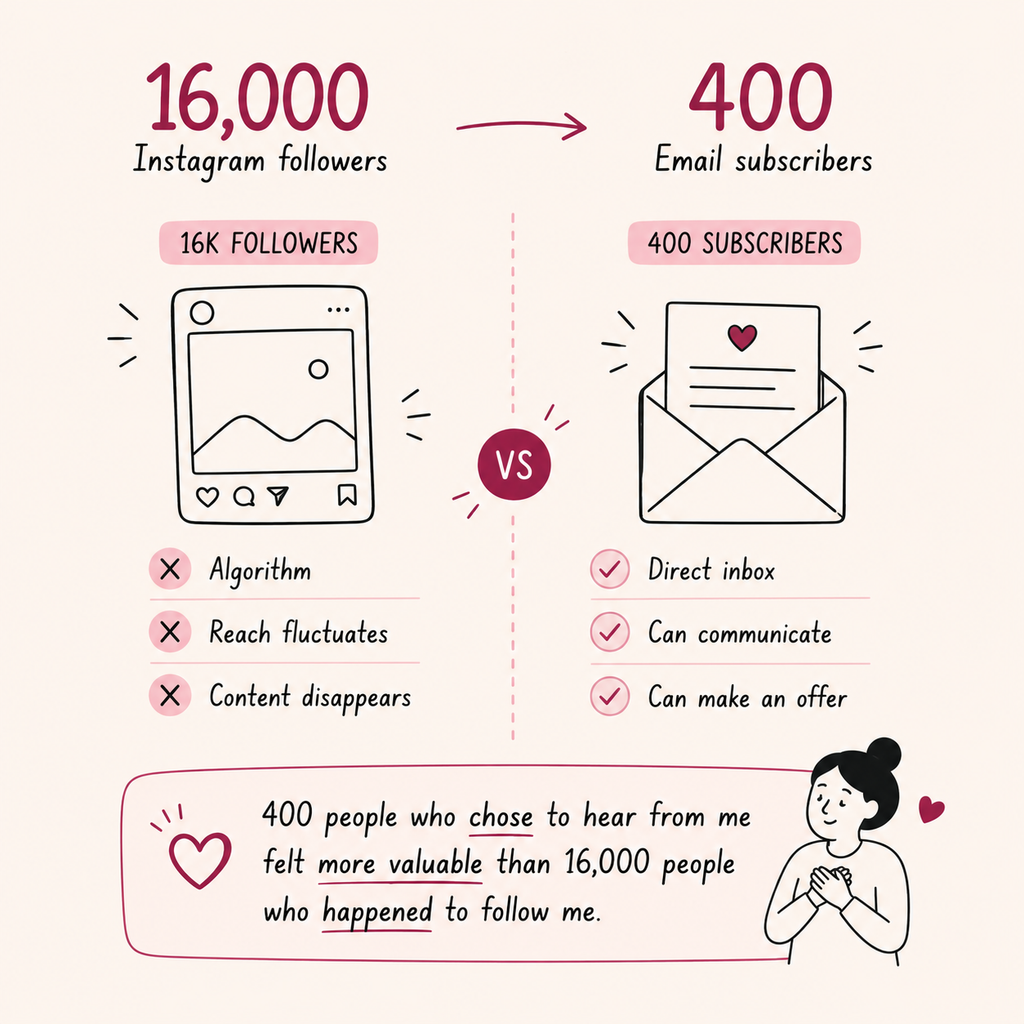
Your email list doesn’t have to replace everything else you are doing. You can still use Instagram, Facebook, YouTube, your blog, your podcast, or any other platform where people can discover you.
Think of all of these as different ways people can find you. Your email list gives you a place to bring those people together so you can continue building a relationship with them.
And you can start doing that today, even if you are starting with zero subscribers.
You don’t have to wait until you have a big audience. You just need to start.
What Does “Starting an Email List From Scratch” Actually Mean?
When I say you’re starting an email list from scratch, I’m assuming you already have something you’re building, selling, teaching, or sharing, but you don’t have an email list yet.
If you’re completely new to online business and you’re still figuring out your niche, your audience, what you want to sell, or who you want to work with, that’s a different starting point. I’ve covered those basics in my guide to starting an online business.
If you’re building an online coaching, consulting, or information-based business, the process of starting your email list is pretty much the same. I also have a separate guide on building an email list specifically for online coaches.
For this article, we’re keeping it simple. You have something you want to build, and you want to start getting people onto your email list.
What You Actually Need to Start an Email List
If you’re starting from scratch, there are a lot of things people will tell you that you need before you can start building an email list.
You need a website. You need a funnel. You need automations. You need a welcome sequence. You need different forms and different pages and all kinds of tech.
You really don’t need all of that when you’re starting out.
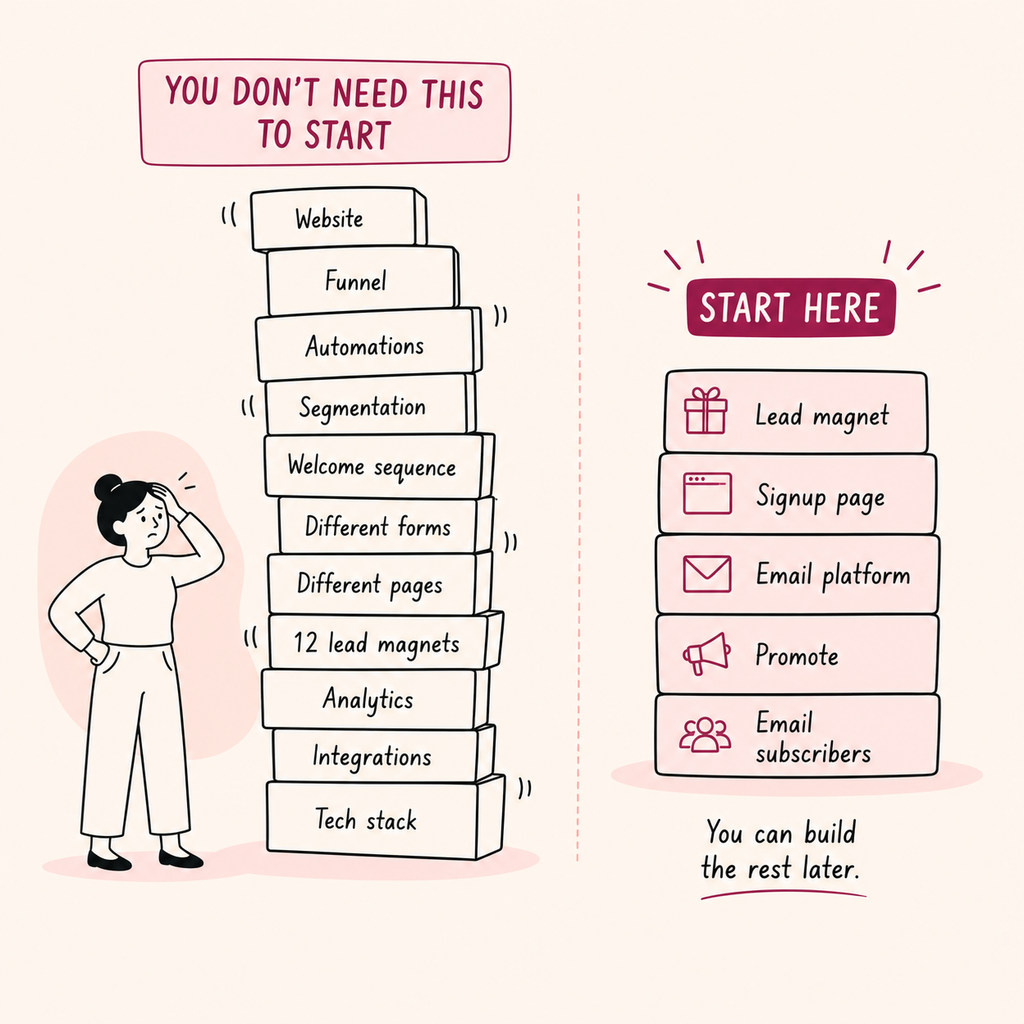
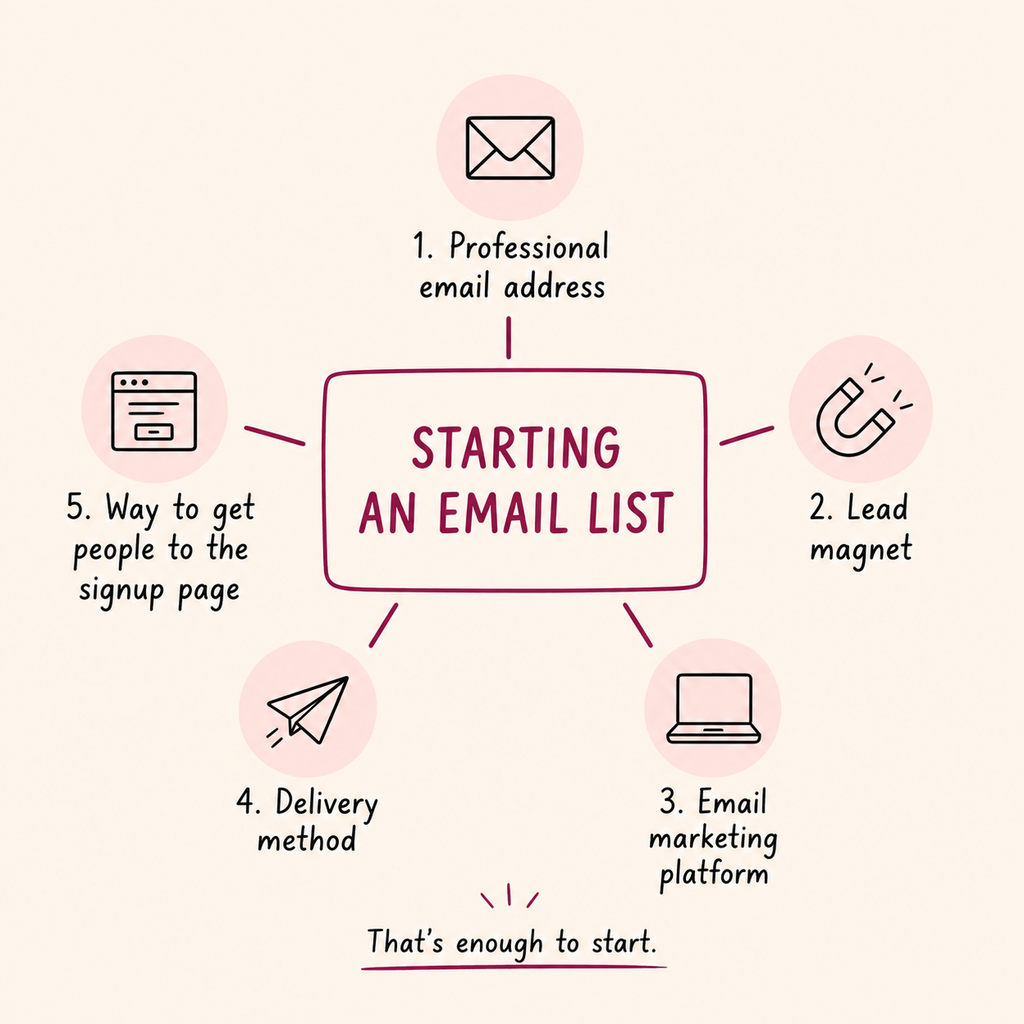
If you have zero subscribers right now, here’s the honest truth. You don’t need an audience, a following, or a perfect plan to get your first one. You need five basic things in place, and once you have them, all you’re really doing is putting your lead magnet in front of people until someone says yes.
There are five basic things you need to get your email list started:
- A professional email address
- A lead magnet
- An email marketing platform
- A way to deliver your lead magnet
- A way to get people to your signup page
Let’s look at each one.
1. A professional email address
If you’re building an online business, I would start with a professional email address.
This is the email address you’ll use to send emails to your subscribers and communicate with people in your business. You don’t need anything complicated here. You just want an email address that represents your business and that you can continue using as your business grows.
It’s a small thing, but I would set this up from the beginning rather than changing everything later.
2. A lead magnet
The next thing you need is something that gives people a reason to join your list.
This is usually called a lead magnet.
A lead magnet is a resource you give someone for free in exchange for their email address. It could be a checklist, a guide, a template, a workbook, a resource list, a mini training, or something else that helps them solve a specific problem.
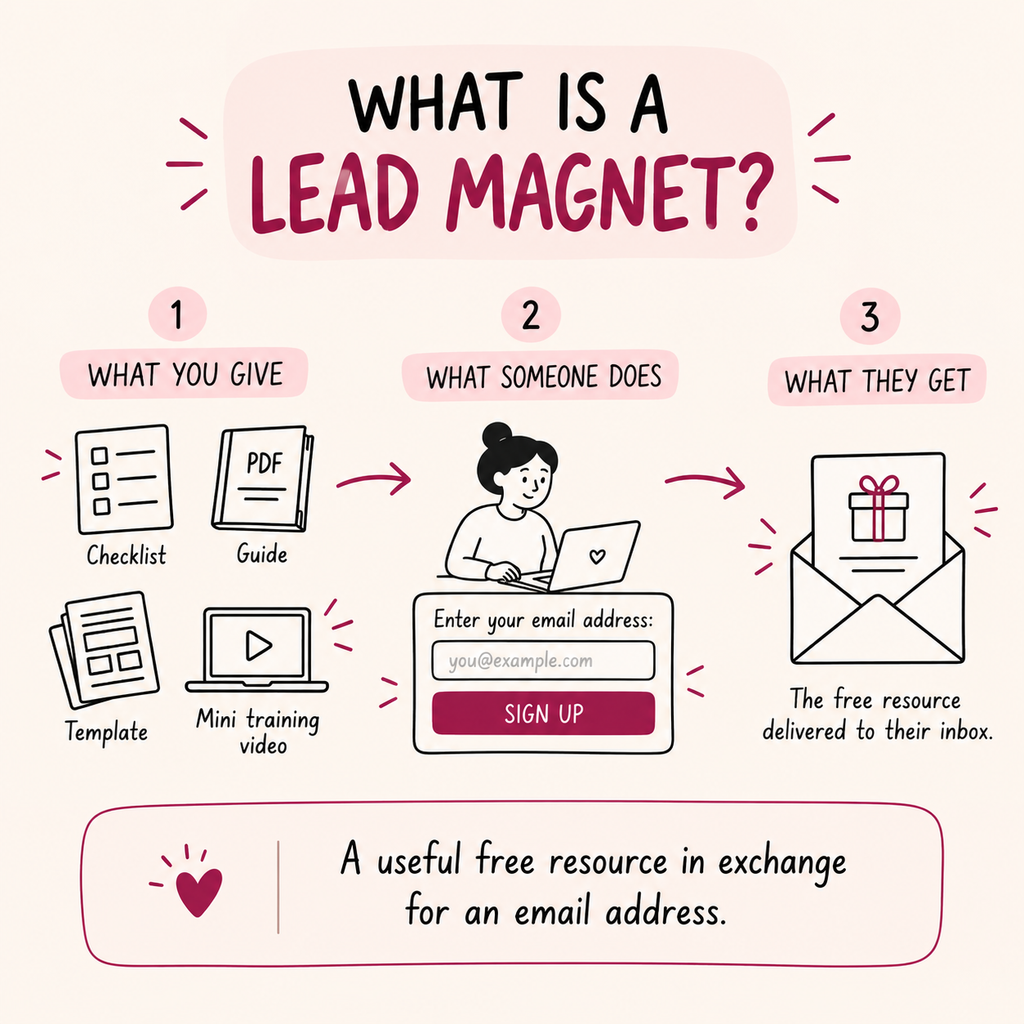
Your lead magnet doesn’t need to be a 50-page ebook.
In fact, I would much rather see you create something simple that someone can actually use than spend three months creating the most comprehensive free guide on the internet.
The lead magnet needs to be useful, specific, and easy to consume. It should solve a problem your audience actually has and ideally give them something they can take action on.
And there is another thing I would think about when you’re creating a lead magnet today.
AI has changed what people expect from free content.
If your lead magnet is simply a collection of information that someone could find through a quick Google search or ask ChatGPT to give them, it’s going to be much harder to make that resource stand out.
That doesn’t mean your lead magnet needs to become complicated.
Your experience, your way of doing something, your framework, your examples, your templates, your recommendations, or the way you’ve already organised something for someone can all make a simple lead magnet much more useful.
So don’t get obsessed with creating more lead magnets. Focus on creating one that gives the right person a good reason to join your list.
I’ve written more about the mistakes I see people making with lead magnets here.
3. An email marketing platform
Once you know what you’re giving people, you need somewhere to collect their email addresses.
This is where your email marketing platform comes in.
Your platform is where your subscribers will be stored. It is also where you can create your opt-in page or form, send the email that gives people access to your lead magnet, and eventually send your regular emails.
You don’t need to piece all of these things together with different tools when you’re starting out. An email marketing platform can handle most of what you need at this stage.
My preferred platform is Kit. I’ve used it for my own list and I like how simple it is to get started with. You can create your signup page, collect subscribers, and send your emails from the same place.
I’ve also used New Zenler for a long time, so that’s another option you can look at if you want something different. This is an all-in tool and not an email marketing platform, but it works all good for early stages.
The important thing is not to spend weeks comparing every email marketing platform available.
Pick one that gives you what you need to start, set it up, and move on to getting people onto your list.
4. A way to deliver your lead magnet
Now you have your lead magnet and people can sign up for it. You also need to actually give them what you promised.
This is usually done through your first delivery or welcome email.
Someone enters their name and email address on your opt-in page. They submit the form. Your email marketing platform sends them an email, and that email gives them access to the lead magnet. That’s it.
Your lead magnet could be a PDF. You could keep it in Google Drive or Google Docs. You could host it somewhere else that makes sense for what you’ve created.
You don’t need to build some complicated delivery system just because you’re starting an email list.
Make it easy for people to sign up and easy for them to get what they came for.
5. A way to get people to your sign-up page
This is the part that actually starts growing your list.
You can have the best lead magnet in the world, but if nobody knows it exists, nobody is going to sign up for it.
So once your basic setup is ready, your next job is to get your lead magnet in front of people.
You could promote it on social media. You could write blog posts around the problem it solves. You could use Facebook groups. You could promote it through your podcast or YouTube channel. You could collaborate with other people in your industry. You could use swaps or other list-building strategies.
There are a lot of ways to do this. And you don’t need to use all of them.
Start with the places where you already have some visibility or where you know you can get in front of the right people. Then keep promoting your lead magnet instead of creating something new every time you don’t see immediate results.
That’s the basic setup.
You have something people want. You have somewhere they can sign up. You can collect their email address. You can deliver what you promised. And you have a way to get people to that signup page.
You now have everything you need to start building your list.
Do You Need a Website to Build an Email List?
No.
You can start building an email list without a website.
Your email marketing platform can give you a hosted opt-in page where people can enter their name and email address and sign up for your lead magnet. Once they sign up, the platform can send them the email that gives them access to your resource.
That’s enough to get started.
Of course, having your own website can be useful as your business grows. You may eventually want a place where people can learn more about you, read your blog, find your offers, and discover your other resources.
But you don’t need to build a website before you start building your email list.
If you’re starting from scratch, I would set up your email marketing platform, create your opt-in page, add your lead magnet, and start getting people onto your list.
Don’t let waiting for a website stop you from starting your email list.
Now You Need People to Actually Subscribe
Setting up your email list is only the beginning. You also need people to actually find your lead magnet and sign up for it.
This is where list building becomes more about promotion.
There are many ways you can promote a lead magnet. You can use social media, your blog, Facebook groups, collaborations, podcasts, YouTube, or other places where your audience is already spending time.
When I first started building my list, Facebook groups were one of the main ways I got people to my lead magnets.
How I got my first 400 subscribers
I created my first few lead magnets and started sharing them in different Facebook groups.
One of the things I used were what I called ladder posts. I would create a post that gave people something useful and then invited them to get my free resource if they wanted to go further.
I was doing this across different Facebook groups, and it worked really well for me at the time.
In fact, I grew my email list to around 400 subscribers in just 30 days.
Facebook groups can still be a way to promote your lead magnet, but they don’t work in exactly the same way they did when I started. The groups you have access to, their rules, how active they are, and what kind of promotion is allowed can all make a difference.
So I wouldn’t take my 400 subscribers in 30 days as a formula that you should try to copy today.
The bigger lesson is that you need to find places where you can get your lead magnet in front of the right people and then consistently promote it.
You don’t need to have one perfect list-building strategy from day one.
You can start with the audience and platforms you already have access to, see what works, and then add more ways to grow your list as you go.
How I Eventually Grew My List Beyond My First Few Hundred Subscribers
Once I came back to list building, I started approaching it differently.
One thing that helped me was creating varied lead magnets instead of expecting one freebie to bring everyone onto my list.
Different people are interested in different things. Even when they are part of the same broader audience, they can have different problems they want help with right now. Having different lead magnets gave people more ways to discover my work and find something that was relevant to them.
Collaborations and swaps also became a big part of my list growth.
When you collaborate with someone who has an audience that is relevant to what you do, you can introduce your lead magnet to people who may have never found you otherwise. List swaps and other collaborations can work in a similar way.
These became much more important for my list growth as I moved beyond the initial stage of simply sharing my lead magnets wherever I could.
There are many ways to grow an email list, and you don’t need to try all of them at once. What worked for me in the beginning was different from what helped me grow later, and what works for you will depend on where you already have visibility and who you want to attract.
If you’re ready to look at the different ways you can actively grow your list, I’ve put together 51 Ways to Grow Your Email List that you can start exploring here.
For now, the important thing is to understand that creating your opt-in page and lead magnet is the setup. Getting people to it is the actual list-building work.
Your Map to Your First 100 Subscribers Is Simple
Once you have your lead magnet and all the basic setup in place, your job is actually quite simple.
Keep promoting it.
You don’t need to create a new lead magnet every week. You don’t need to keep changing your opt-in page. You don’t need to keep adding more tech to your setup.
You need to get more people to see the lead magnet you already have.
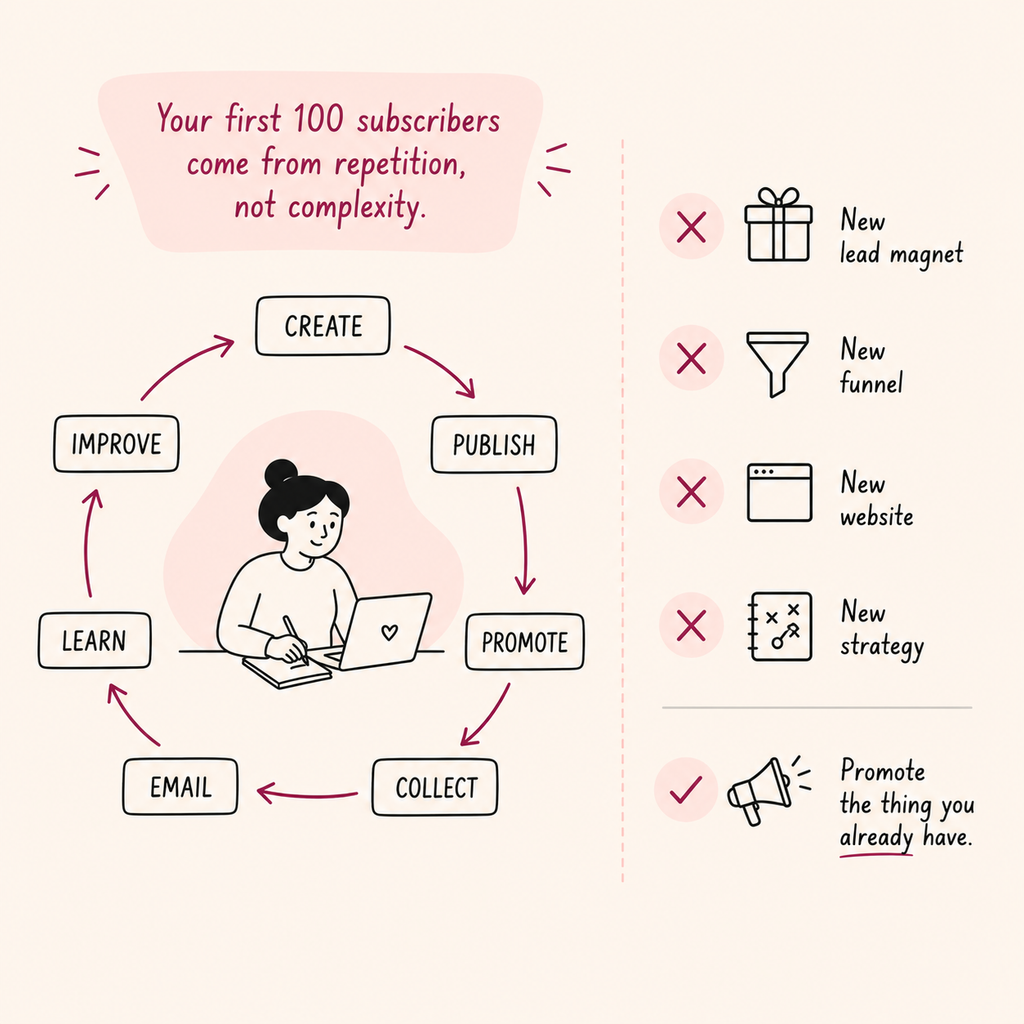
Talk about your lead magnet in your content. Mention it in your stories. Share it when you’re having relevant conversations. Put it in places where people are already looking for the problem your lead magnet solves.
The more people who see it, the more opportunities you have to get subscribers.
You don’t have to make list building complicated when you’re starting out. You can have one lead magnet and keep finding different ways to get it in front of the right people.
I’ve also put together 47 Ways to Promote Your Lead Magnet, which you can use when you’re ready to start promoting it more consistently.
Your first 100 subscribers will come from repeating that process, not from constantly rebuilding your entire list-building system.
Don’t Make the Mistake of Chasing Subscribers
When you start building an email list, it is very easy to get obsessed with the number.
I know because I did exactly that. When I started growing my list, I was obsessed with getting to 1 lakh subscribers. I wanted to see that number grow, and I tried different ways to get more and more people onto my list.
I eventually grew my list to around 10,000 subscribers. And then I deleted around 7,000 of them.
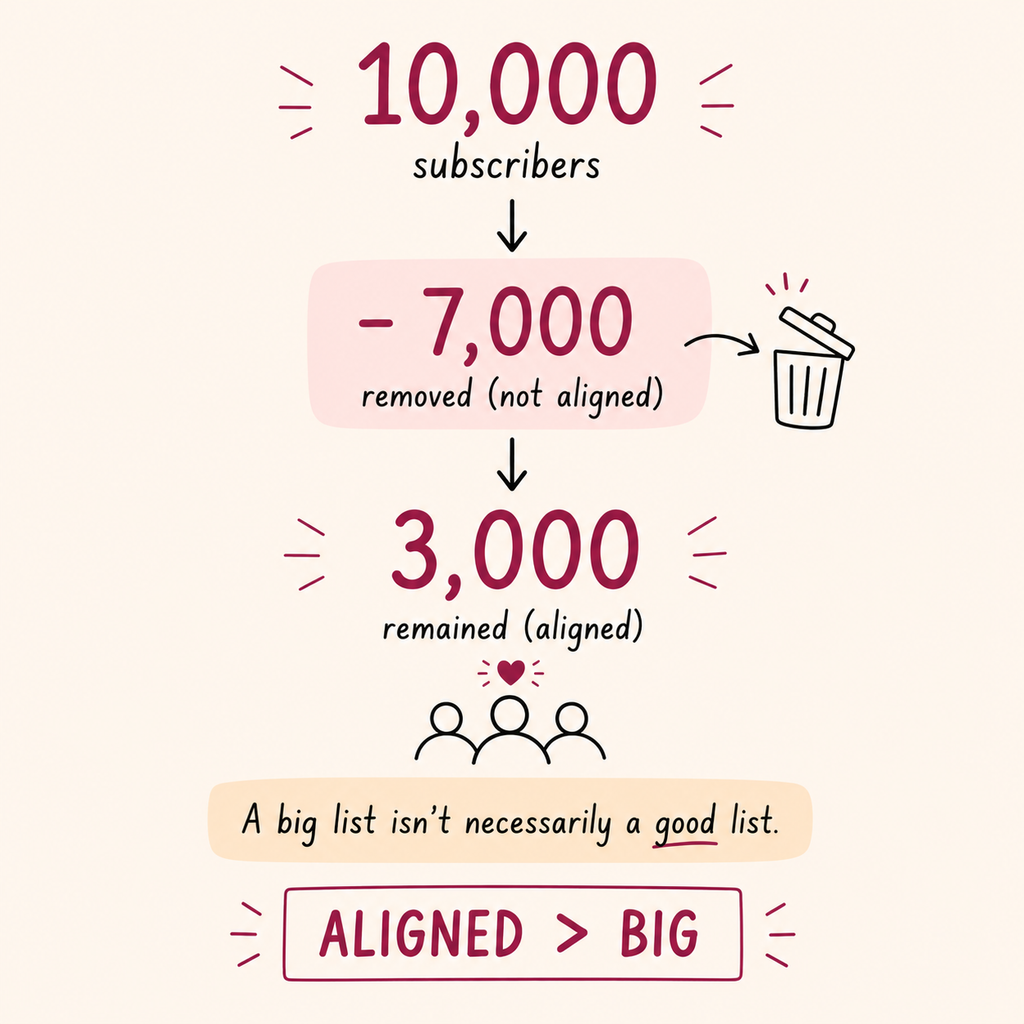
That experience taught me something that I wish I had understood much earlier.
A big email list isn’t necessarily a good email list. What you want is an aligned email list.
So focus on attracting the right people instead of more people.
This is one reason I don’t recommend creating random lead magnets just because they are easy ways to get subscribers. You may see your numbers going up, but that doesn’t mean you’re building an audience that will read your emails, buy from you, or stay connected with your business.
Your first lead magnet may not be perfect. You may attract some people who don’t stay. Your messaging will change. Your business will change. You will learn more about your audience as you go.
You don’t need to figure all of this out before you start.
Your goal is not perfection; you want to start building your list, see who is joining, learn from what is happening, and keep improving as you go.
That’s a much better way to build your list than waiting until you know exactly how to get the perfect subscriber.
You Have Your First Subscriber. Now What?
The moment someone joins your email list, you can start emailing them.
You don’t need to wait until you have 100 subscribers. You don’t need to wait until you have 500 subscribers. You don’t need to wait until you have created the perfect welcome sequence or figured out every part of your email strategy.
If you have one subscriber, you have someone you can email.
This is something I wish I had done differently when I first started building my list.
I didn’t always email my subscribers consistently. And when I did email them, there were times when I was simply trying to send something because I felt like I should be sending an email.
I would repurpose something I had already created and send it to my list, but that didn’t necessarily mean I was building a relationship with the people who had joined.
And that matters.
Someone gave you their email address because they wanted to hear from you. They downloaded your resource, they were interested in what you had to say, and they gave you permission to continue the conversation.
If you disappear for months, they may not remember why they joined your list in the first place.
The important thing is that you start building that relationship from the beginning.
I learned this the hard way. Because I wasn’t doing enough of this when I started, I ended up with subscribers who weren’t really connected to me or my business anymore. And eventually, I had to delete a large part of my list.
So don’t make the same mistake.
Start emailing from subscriber number one.
What Should You Email Your First 100 Subscribers?
Once you’re emailing from subscriber one, the next question is what to actually send.
Your emails don’t need to be complicated.
You can teach something. You can share an experience. You can answer a question that people often ask you. You can share your perspective on something. You can point people toward something useful. You can tell a story. And when you have something that you want to sell, you can make an offer.
The important thing is to give people a reason to keep opening your emails.
When you’re starting out, I recommend emailing at least once a week. That gives people a chance to hear from you regularly and start getting familiar with you and what you do.
You don’t need to send a long email every week. You don’t need to create something completely new every time. But you do need to give people a reason to keep hearing from you.
As your list grows, you can decide what frequency and type of emails work best for you and your business. You don’t need to have a perfect newsletter format from the beginning. You just need to keep showing up in their inbox and continue the relationship you started when they signed up for your lead magnet.
What You Don’t Need to Worry About When You’re Starting
Once you start reading about email marketing, it can quickly feel like there is a lot more to do.
You hear about automations, funnels, segmentation, welcome sequences, different lead magnets, analytics, integrations, and all the different pieces of tech you could add to your business.
All of these things can be useful as your list grows. But you don’t need to figure them all out when you’re starting from scratch.
You don’t need complicated automations.
You don’t need an elaborate funnel.
You don’t need advanced segmentation.
You don’t need multiple welcome sequences.
You don’t need a dozen lead magnets.
You don’t need a fancy website.
You don’t need perfect branding.
You don’t need sophisticated analytics.
And you definitely don’t need a massive tech stack.
When you have your first few subscribers, your focus should be on getting people onto your list and building a relationship with them.
Your process can be as simple as:
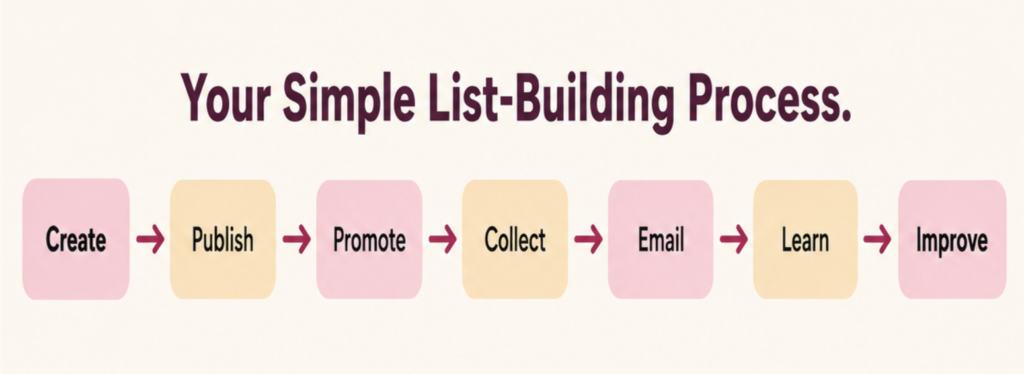
Create something useful.
Publish it. Promote it.
Collect subscribers.
Email them.
Pay attention to what you learn.
Then improve what you’re doing.
You can add more systems as your list grows and your business needs them. But don’t let all of those things become a reason to delay starting.
Start with what you need today. You can build the rest as you go.
When Should You Start Measuring What’s Working?
You don’t need to start tracking every number from the moment you create your opt-in page.
When you have very little traffic and only a handful of subscribers, there isn’t enough information to tell you much.
Once you have more people visiting your opt-in page and joining your list, you can start looking at things like your opt-in conversion rate, subscriber growth, engagement, and unsubscribes.
Personally, I wouldn’t obsess over your opt-in conversion rate when you’ve barely had anyone visit the page. Once you have around 100 subscribers, you can start paying more attention to what the numbers are telling you and where you might want to make changes.
The numbers are there to help you learn what is working. They aren’t there to give you another thing to obsess over.
Your First 100 Subscribers Are Just the Beginning
Remember always, every huge email list started with zero subscribers.
You don’t need to know exactly how you’re going to get to 10,000 subscribers today. You don’t even need to know what your list will look like a year from now.
You need to get your first person onto your list and start building from there.
You can add more tools, more automations, more lead magnets, more strategies, and more systems as your list grows and your business needs them. But you don’t need all of that today.
Create something useful. Put it in front of the right people. Get your first subscribers. Start emailing them. Learn from what happens and keep improving.
Your first 100 subscribers are not the end goal. They are simply the beginning of having a group of people who have chosen to hear from you.